How AI Is Transforming Advertising
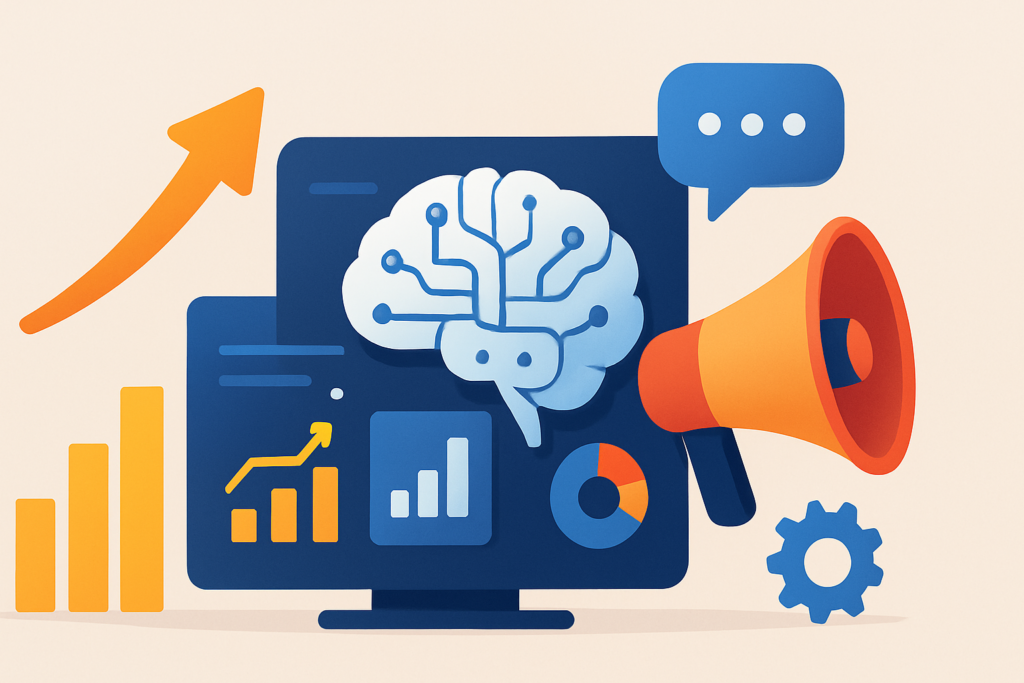
AI is reshaping advertising by automating targeting, optimizing budgets, and accelerating creative production. It also improves measurement, personalization, and campaign decision-making across digital channels.
Quick Overview
- AI improves ad targeting using real-time audience signals.
- Machine learning optimizes bids, budgets, and channel mix.
- Creative tools generate and test variations faster than before.
- Advanced analytics strengthen measurement and reduce waste.
Why AI Is a Turning Point for Advertising
Advertising has always balanced creativity and performance. However, modern media ecosystems are far more complex than in the past. Today, brands compete across platforms with vast audiences and fast-changing demand. Consequently, teams need faster learning loops and more precise decision-making.
That is where AI enters the picture. Artificial intelligence can process enormous datasets quickly. Then it finds patterns humans would miss. As a result, marketers can launch campaigns with stronger relevance and tighter control.
Importantly, this shift is not only about automation. It also changes how advertising is planned, produced, and measured. Instead of relying on guesswork, teams can test hypotheses continuously. Over time, those experiments improve targeting and creative effectiveness.
Key Ways AI Is Transforming Advertising
AI affects nearly every part of the ad lifecycle. From audience discovery to reporting, the technology is turning many tasks into data-driven workflows. Meanwhile, it supports both large enterprises and lean marketing teams.
1) Smarter audience targeting and segmentation
Traditional targeting often depends on broad demographics and manual segmentation. Yet consumer behavior is more nuanced. With AI, advertisers can model intent and preferences using signals like browsing history, device data, and engagement patterns.
For example, machine learning can group users by likelihood to convert. It can also identify which segments respond to specific messages. As campaigns run, the system learns which audiences perform best under changing conditions.
Additionally, AI can support privacy-aware targeting strategies. Instead of relying only on third-party identifiers, teams increasingly use aggregated or modeled signals. This helps maintain performance while respecting modern privacy expectations.
2) Automated bidding and budget optimization
Media buying is often where costs quietly spiral. Even small inefficiencies can add up over months. AI can help by continuously optimizing bids based on predicted outcomes. Rather than using fixed rules, bidding models update in real time.
That capability is especially valuable across multiple channels. Search, social, and display platforms have different auction dynamics. With AI-driven bidding, advertisers can allocate spend more intelligently across these environments.
At the same time, optimization reduces manual workload. Marketers can focus on strategy and creative direction. Then the system handles speed and scale.
3) Creative generation, personalization, and A/B testing at speed
Creative work still matters most. However, producing enough variations for every audience segment is difficult. AI tools can generate and adapt content faster. Then they help teams test multiple versions without waiting weeks.
Personalization is a major advantage here. Instead of sending one generic ad, systems can tailor headlines, product highlights, or call-to-action text. This tailoring can increase relevance and improve performance.
Importantly, AI should augment creative teams, not replace them. Strong brands maintain clear guidelines for tone, claims, and visual identity. AI then helps execute variations that stay within those guardrails.
4) Predictive analytics for better campaign decisions
Many marketers measure results after the fact. AI shifts this approach toward forecasting. Predictive models estimate how changes in targeting, budget, or creative may influence outcomes.
For instance, AI can forecast which audiences will convert next week. It can also project diminishing returns. Consequently, teams can adjust spend before performance drops.
These insights support more confident planning. Instead of debating “what might work,” teams can evaluate evidence-based predictions.
5) Improved measurement and attribution
Attribution remains one of advertising’s hardest problems. User journeys span multiple devices and sessions. Moreover, cookie limitations and privacy policies complicate tracking.
AI can assist with measurement using probabilistic modeling and modeled conversion signals. It can also help unify data across channels. Therefore, reporting becomes clearer and decision-making improves.
Even so, measurement still requires careful setup. Data quality, event tracking, and campaign naming conventions matter. When implemented well, AI improves visibility rather than hiding complexity.
How AI Advertising Fits Into Modern Marketing Strategy
AI is not a standalone feature. Instead, it integrates into existing marketing workflows. Brands that succeed typically combine AI with human strategy and brand judgment.
One reason is that advertising success requires more than prediction. It requires positioning, storytelling, and trust. AI can optimize delivery, but humans shape the message and the meaning.
If you want deeper context on broader marketing shifts, explore how AI is changing digital marketing. That article connects AI capabilities to strategy decisions across the funnel.
How It Works / Steps
- Collect and prepare data: Gather signals from campaigns, site behavior, and customer outcomes.
- Define goals and success metrics: Choose conversion events, value metrics, and constraints.
- Train or activate models: Use historical data to predict performance and audience likelihood.
- Generate creative variations: Produce ad copy, images, or layouts based on brand-approved rules.
- Run experiments and optimize: Test variations, adjust bidding, and rebalance budgets dynamically.
- Measure outcomes and iterate: Analyze results, refine targeting, and update future campaigns.
Examples of AI in Advertising Across Channels
AI transformation is happening everywhere. However, each channel benefits from different use cases. Below are practical examples that marketers can relate to.
Search advertising
In search, intent signals are highly valuable. AI can map queries to predicted conversion likelihood. It can then adjust bids automatically for auctions. Over time, this improves efficiency and reduces wasted clicks.
Social media and feeds
Social platforms are built for engagement signals. AI can learn which creative formats earn attention. It can also identify which audience characteristics correlate with purchases. Consequently, ad delivery becomes more relevant.
Display and programmatic advertising
Display ads often struggle with relevance. AI helps by predicting which users are most likely to respond. It also supports frequency management to reduce ad fatigue. As a result, brands spend more effectively.
Email and marketing automation
Even though email is not “ads” in the traditional sense, it is part of the advertising ecosystem. AI can personalize subject lines and recommend content. It can also decide when to send based on predicted engagement windows.
Video advertising
Video is expensive, so optimization matters. AI can assist with targeting, but also with creative assembly. Then it can evaluate performance by scene-level engagement signals in some setups.
If you’re exploring tool choices, consider reading AI tools for digital advertising. It outlines categories and what to look for when evaluating vendors.
What Marketers Should Watch Out For
AI offers substantial upside, but risks exist. The biggest mistake is treating AI outputs as truth without verification. Instead, teams should monitor quality and maintain control over messaging.
Common pitfalls include poor data foundations, unclear measurement, and unapproved creative claims. Also, automation can scale mistakes quickly. Therefore, human review is still essential for brand safety and compliance.
Practical guardrails
- Use brand guidelines: Lock tone, style, and vocabulary rules.
- Validate tracking: Confirm events fire correctly across platforms.
- Set performance thresholds: Avoid “optimize at all costs” behavior.
- Review outputs: Check headlines, offers, and visual consistency.
- Document assumptions: Explain why targeting or models were chosen.
Business Impact: ROI, Speed, and Competitive Advantage
When AI is deployed thoughtfully, advertising teams can move faster. They can launch new experiments quickly and learn sooner. That acceleration reduces the time between insight and action.
In addition, AI can lower operational overhead. Automated bidding and creative testing reduce repetitive manual work. As a result, teams can reinvest time into strategy and partnerships.
Ultimately, AI can improve ROI by reducing waste and increasing relevance. Yet ROI improvements depend on implementation quality. Teams need accurate data, consistent creative direction, and disciplined experimentation.
For readers interested in broader AI trends in business operations, how AI is changing the future of work offers a useful perspective. It explains how AI workflows affect roles, responsibilities, and skills.
FAQs
Will AI replace advertising creative teams?
No. AI can generate drafts and variations, but creative direction still requires human judgment. Teams also need to ensure accuracy, compliance, and brand voice.
Is AI advertising effective without large budgets?
Yes. Many AI tools focus on optimization and testing efficiency. Smaller teams can benefit by targeting more precisely and learning faster.
How does AI handle privacy limitations?
AI often relies on modeled signals, aggregated data, and privacy-aware measurement. Setup matters, and teams should follow platform and regulatory guidance.
What metrics should I track when using AI?
Track conversion rate, cost per acquisition, ROAS, and customer value. Also monitor creative engagement and quality signals to avoid optimizing for the wrong outcomes.
Key Takeaways
- AI improves targeting by predicting intent and conversion likelihood.
- Automated bidding helps manage budgets in real time.
- Creative generation enables faster testing and personalization.
- Predictive analytics supports earlier, smarter decisions.
- Measurement improves when data quality and tracking are strong.
Conclusion
AI is transforming advertising from a largely manual craft into a continuously optimized system. It changes how brands understand audiences, allocate budgets, and test creative concepts. Meanwhile, it improves measurement by adding predictive and probabilistic modeling.
However, the strongest results come from smart partnerships between technology and people. Marketers still set strategy, define brand voice, and validate outputs. AI then scales execution with speed and precision.
In the coming years, AI-driven advertising will likely become the default. Yet the competitive edge will belong to teams that treat AI as a decision engine. They will use it responsibly, measure outcomes rigorously, and keep creativity at the center.