How AI Is Changing the Future of Work
Artificial intelligence is reshaping where, how, and why we work. From newsroom automation to factory robotics, AI affects jobs across every sector. This article examines the trends, tools, and practical steps workers and employers need to navigate the change. It also highlights the news and policy shifts that will define the next decade in the workplace.
Why AI Adoption Is Accelerating in Workplaces
Companies now deploy AI to cut costs, increase speed, and improve accuracy. Cloud services, cheaper sensors, and powerful models make deployment easier. As a result, AI is moving from pilot projects into core operations.
Moreover, market pressures and competition force faster adoption. Organizations that use AI effectively gain measurable advantages. For employees, this means both opportunities and disruption.
Automation, Job Displacement, and New Roles
Automation is central to headlines about AI and jobs. Routine tasks are the most exposed to automation. Yet, the story is more nuanced than replacement alone.
While some roles shrink, new positions emerge that require oversight, interpretation, and machine supervision. Therefore, the labor market will shift rather than simply contract.
Jobs Most Likely to Change
Roles characterized by repetitive tasks face rapid transformation. Examples include data entry, basic customer support, and simple accounting tasks. Meanwhile, roles requiring empathy, complex judgment, and creative problem solving remain more secure.
- Routine administrative tasks become increasingly automated.
- Higher-level analysis and strategy work evolves with AI assistance.
- New hybrid roles combine domain expertise and AI oversight.
Augmentation: How AI Enhances Human Work
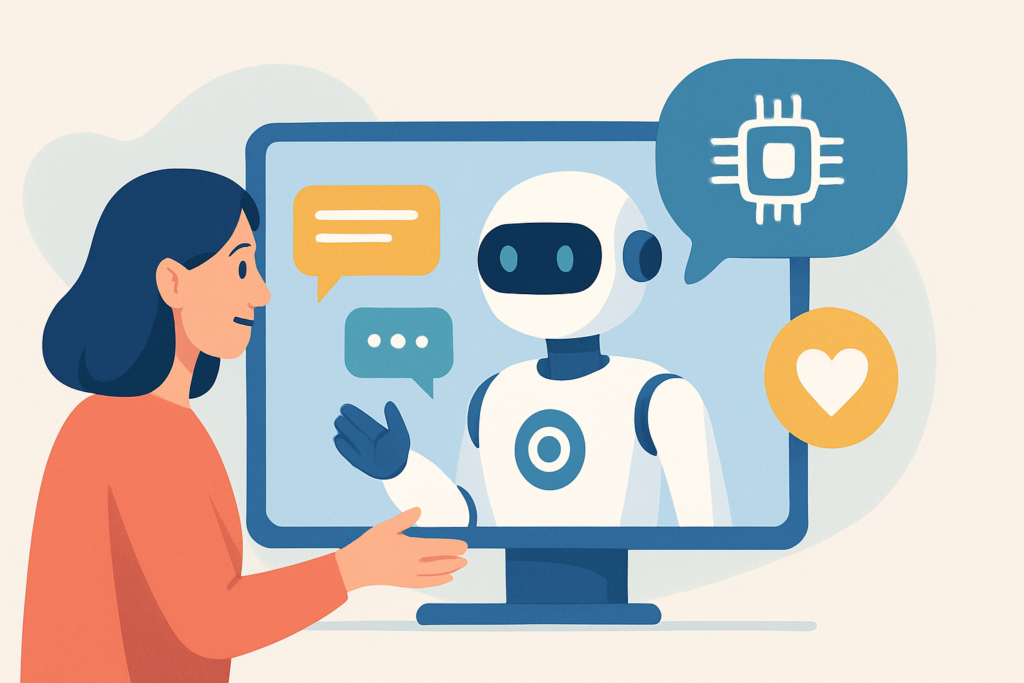
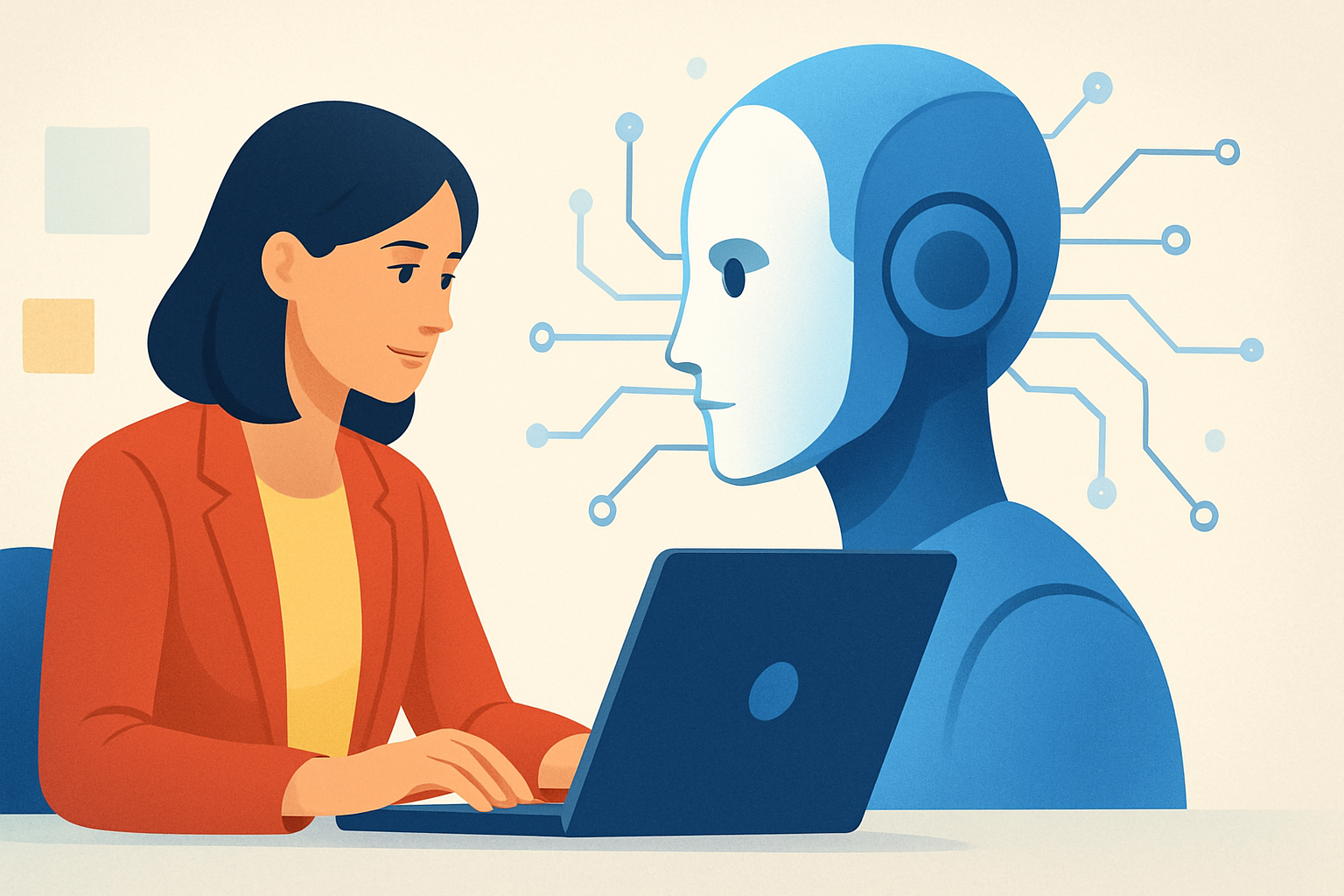
In many settings, AI augments rather than replaces workers. Intelligent tools handle routine elements. Humans focus on interpretation, ethics, and relationship-building.
This augmentation model increases productivity. It also raises demands for new skills. Workers who can pair domain knowledge with AI literacy will be in demand.
Examples of Augmentation in Practice
Healthcare uses AI to flag anomalies in scans. Doctors then confirm and explain results. In marketing, AI generates drafts of campaigns. Humans refine strategy and brand voice.
Education uses adaptive platforms to tailor lessons. Teachers spend more time on mentoring and design. So, augmentation often improves outcomes while changing daily tasks.
Essential Skills for the AI-Enabled Workplace
Reskilling and upskilling are critical for workers to stay relevant. Soft skills remain essential. However, technical literacy is increasingly important.
Employers and educators must invest in continuous learning. Lifelong training programs will become standard. Workers should expect to update skills multiple times in their careers.
- Digital literacy: basic AI concepts and safe usage.
- Data literacy: reading and interpreting basic analytics.
- Creative problem solving and ethical judgment.
- Communication skills for cross-functional collaboration.
What Leaders Should Do: Strategy and Workforce Planning
Executives must balance efficiency with social responsibility. They should map roles likely to be automated and plan transitions. This includes retraining programs and internal mobility paths.
Additionally, leaders should test AI tools carefully. Pilots must measure impact on productivity, morale, and customer outcomes. As a result, scaled deployments become less risky and more effective.
AI Tools Transforming Productivity
A wide range of AI tools already improves daily productivity. These tools automate scheduling, summarize documents, and suggest code. Many save hours per week for knowledge workers.
For readers interested in specific tools, we covered practical toolsets elsewhere. See our roundup of solutions that can reclaim your time. Also, small businesses should consider tailored platforms to scale growth.
- AI Tools That Can Save You Hours Every Day — productivity and automation tools for knowledge work.
- Top AI Tools for Small Business Growth — platforms to scale operations and marketing.
- AI Trends That Will Change Your Career — emerging patterns every worker should watch.
Workplace Design: Remote, Hybrid, and AI-First Offices
AI influences not only tasks, but workplace models too. Remote and hybrid work benefit from AI scheduling and meeting summarization. This makes collaboration smoother despite physical distance.
Some firms adopt AI-first office designs. These include digital assistants, smart meeting tools, and automated facility management. Consequently, physical spaces become more flexible and efficient.
Impacts on Employee Experience
AI tools can reduce mundane burdens. They also risk increasing surveillance if misused. Therefore, companies must create clear policies about data use and employee privacy.
When implemented responsibly, AI can improve work-life balance. Transparent governance and worker input reduce friction and distrust.
Ethics, Policy, and Legal Considerations
As AI alters jobs, regulators and unions respond. Governments explore retraining funds, universal benefits, and rights related to algorithmic decisions. This policy landscape is evolving rapidly.
Ethical AI is more than a buzzword. It includes fairness, transparency, and accountability. Firms must audit models and report results to stakeholders.
- Labor policies that support transitions are gaining attention.
- Regulation of algorithmic hiring is expanding in several countries.
- Ethical audits and impact assessments become standard practice.
How Workers Can Prepare Today
Proactive steps help individuals remain resilient. First, learn foundational digital skills and AI concepts. Second, pursue domain expertise that AI finds hard to replicate.
Third, build a portfolio of projects that show your AI collaboration skills. Finally, network in communities that blend technology and your industry.
- Take short courses on AI fundamentals and data literacy.
- Focus on creative and interpersonal strengths.
- Volunteer for internal projects that use AI tools.
- Monitor sector-specific trends and certifications.
Challenges Ahead: Inequality and Access
Unequal access to training and tools can deepen disparities. Small firms and low-income workers face adoption barriers. Policy and private investment must close these gaps.
Programs that subsidize training and provide affordable tools can reduce inequality. Therefore, public-private partnerships will be essential for equitable outcomes.
Case Studies: Successes and Cautions
Several organizations show how to implement AI responsibly. For instance, healthcare systems that paired AI diagnostics with clinician oversight improved outcomes. Conversely, rushed deployments sometimes undermined trust.
These mixed results emphasize careful planning. Pilot projects, transparent reporting, and worker involvement improve success rates.
Key Takeaways
- AI is accelerating workplace change in both automation and augmentation.
- Reskilling and lifelong learning are critical for workforce resilience.
- Responsible deployment requires ethics, transparency, and worker input.
- Productivity tools offer real gains, but policy must address inequality.
- Leaders who plan transitions and retrain employees reduce disruption.
Conclusion
AI is changing the future of work in profound ways. It will displace some tasks while creating others. Workers who combine human strengths with AI literacy will thrive.
Meanwhile, leaders must invest in training and ethical governance. With thoughtful policies and careful deployment, AI can boost productivity and improve job quality. In this evolving landscape, preparation and adaptability are the best strategies.