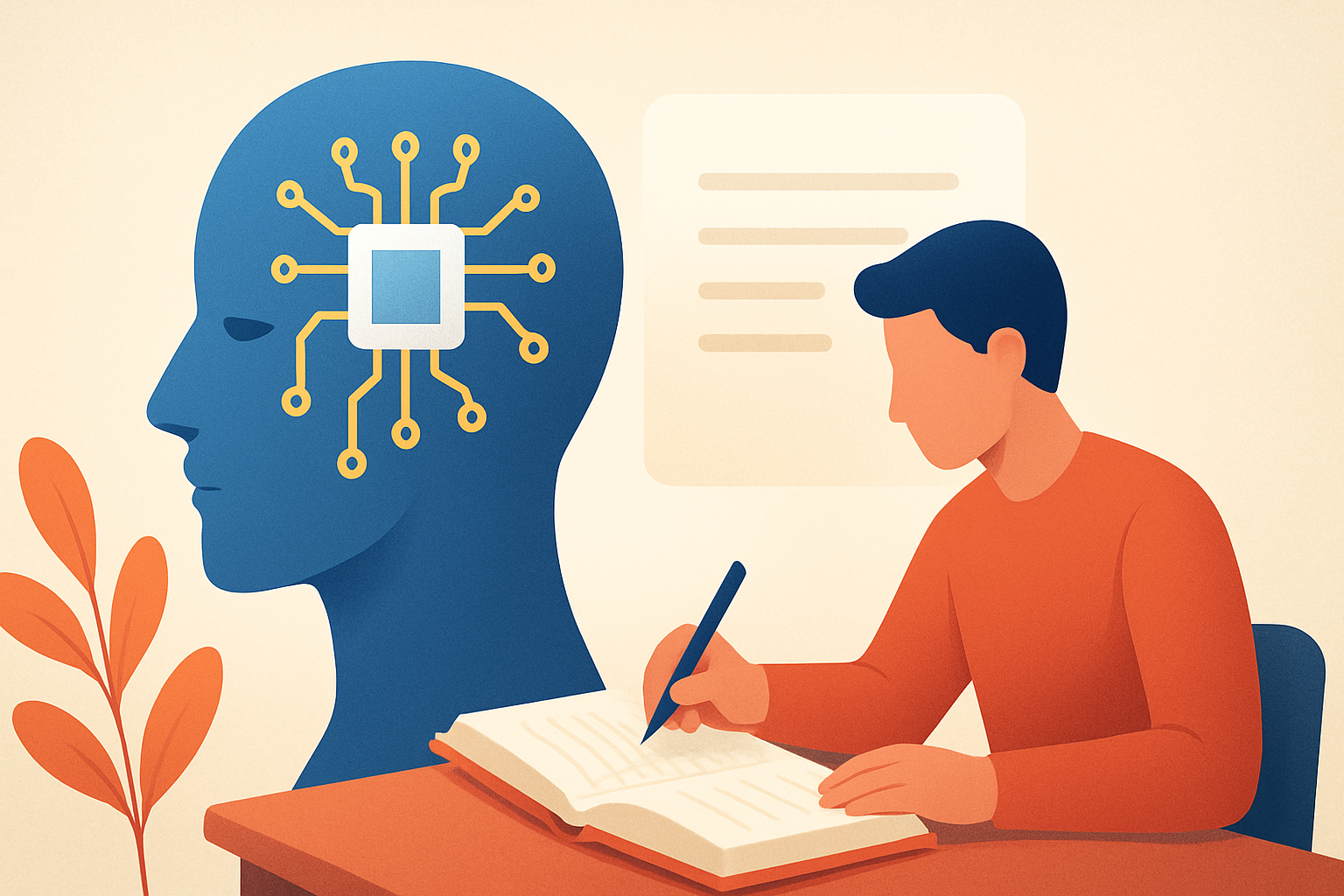
How AI Is Changing Creative Writing
AI is reshaping creative writing by speeding up brainstorming, improving drafts, and enabling new collaborative workflows—while raising new questions about originality, authorship, and style.
Quick Overview
- AI helps writers generate ideas, outlines, and first drafts faster.
- Editors use AI for consistency checks, readability improvements, and style tuning.
- New ethics debates focus on originality, disclosure, and training data rights.
- Successful authors combine AI with human judgment and personal voice.
Why Creative Writing Is Experiencing a Turning Point
Creative writing has always balanced imagination with craft. However, new AI writing systems are changing that balance in measurable ways. They can draft pages, suggest story arcs, and rewrite scenes in seconds. Consequently, the process is becoming more interactive and iterative.
Traditionally, writers spent most of their time on planning and drafting. Now, AI can compress early steps, so writers can start exploring variations sooner. This shift is especially visible for screenplays, marketing copy, fan fiction, and short-form storytelling.
At the same time, the most compelling literature still depends on human perception. Readers notice emotional truth, nuance, and distinctive voice. Therefore, the best use of AI is not replacement. Instead, it is augmentation of the writer’s intent.
The Core Ways AI Is Changing Creative Writing
AI is impacting creative writing across the entire workflow. From idea generation to revision, tools increasingly act like intelligent co-writers. Yet the quality depends on how writers guide the process.
1) Idea generation and worldbuilding
Finding a strong premise can take days. AI can accelerate early brainstorming by proposing loglines, character conflicts, and thematic motifs. Additionally, it can help map a fictional world using constraints you provide.
For example, you can ask for multiple story hooks within a genre and tone. Then, you can choose one and expand it into a detailed outline. As a result, the writer’s creative energy goes into choosing direction.
2) Outlines, beat sheets, and plot restructuring
Many drafts fail because pacing breaks down. AI can suggest beat sequences, turn points, and scene objectives. It can also identify where the plot loses momentum.
Importantly, restructuring is where writers keep control. AI offers options, but the author decides which arcs feel earned. This makes revision more strategic, not just cosmetic.
3) Drafting faster while preserving intent
AI can produce a first draft in your preferred style. It can mimic tone instructions, writing rules, and formatting requirements. Still, the draft is often a starting point, not a finished work.
Writers typically use AI to generate a rough scene, then revise for authenticity. Therefore, the drafting phase becomes a collaboration between automation and taste.
4) Style refinement and consistency editing
Consistency matters in longer projects. AI can track recurring details like names, tenses, and point of view. It can also flag contradictions in character motivations.
Beyond consistency, AI can improve readability and adjust sentence rhythm. However, overuse can flatten voice. That risk is highest when authors accept AI output without edits.
5) Translating “vibes” into actionable writing guidance
One of AI’s most useful features is translating vague goals into concrete changes. If you describe a vibe—“tense and minimal,” for example—AI can propose specific techniques. These include shorter sentences, sharper dialogue, and cleaner exposition.
Consequently, the writer can iterate faster. Instead of rewriting everything manually, you can test alternatives quickly.
AI Writing Tools: From Chatbots to Writing Workflows
Not all AI tools are the same. Some focus on chat-based drafting, while others integrate directly into editing environments. Moreover, some are tuned for marketing, while others support long-form fiction.
To choose effectively, consider your goal and stage. For early drafting, you want ideation and outline support. For revision, you want style and consistency checks. For publishing, you want clear disclosure and compliance options.
If you want to understand different AI interaction styles, see AI Tools Comparison: Chatbots vs Assistants.
How It Works / Steps
- Define the creative target. Specify genre, audience, tone, and constraints like timeline or setting.
- Generate options. Ask for multiple premises, character backstories, or scene proposals.
- Select and outline. Choose the strongest directions and convert them into a beat sheet.
- Draft with guidance. Request scene drafts that follow your outline and voice instructions.
- Revise for truth. Rewrite lines that lack emotional specificity or originality.
- Edit for craft. Use AI for pacing checks, clarity, continuity, and grammar consistency.
- Polish for publication. Ensure the final work reads like you, not like a model.
Examples of AI Use in Creative Writing
AI can support many genres and formats. Below are common scenarios where writers see immediate value.
Example 1: Turning a concept into a short story
A writer begins with a single sentence idea. Then AI generates a premise list, character traits, and a possible ending. After that, the writer selects one version and expands it into an outline. Finally, they draft the story and refine the emotional beats.
Example 2: Improving dialogue authenticity
Dialogue often fails when it sounds generic. AI can propose dialogue that reflects a character’s goals and fears. Next, the writer edits for subtext and rhythm. Because dialogue is personal, human judgment stays essential.
Example 3: Editing for pacing and tension
In thrillers, pacing controls suspense. AI can highlight scenes that drag or moments that lack stakes. Additionally, it can suggest where to add reversals or new information. Then the writer reshapes the sequence to increase tension.
Example 4: Adapting writing for a specific audience
Authors sometimes need to adjust tone for different readership. AI can help shift language complexity and narrative distance. However, the writer must ensure the message remains consistent. Ultimately, audience fit is a creative decision, not just a readability score.
AI and Originality: The New Creative Writing Debate
AI adoption has triggered major questions about originality and authorship. Some readers worry that AI makes writing feel interchangeable. Meanwhile, others argue that AI is only accelerating existing practices like brainstorming and revision.
Legally and ethically, the conversation remains evolving. Writers increasingly ask what counts as “derivative” work. They also wonder how training data and copyrighted text affect outputs.
In response, many authors adopt disclosure practices and stronger editing standards. They treat AI as a tool, then ensure the final product reflects their own creative decisions. That approach helps reduce risk and preserves artistic identity.
Practical Tips for Writing With AI Without Losing Your Voice
AI can enhance your process, but only if you remain the editor of record. Here are practical strategies that many successful writers use.
- Provide constraints. Tell the model your preferred POV, tense, and pacing.
- Use AI for divergence, not final acceptance. Generate options, then choose intentionally.
- Rewrite key sentences manually. Focus on emotion, imagery, and unique phrasing.
- Track your thematic intent. Ask AI to support themes, not just grammar.
- Run continuity checks. Validate names, timelines, and cause-effect relationships.
- Compare versions side by side. Evaluate which draft actually serves your story.
These steps align well with broader lessons in using AI for creative and business outputs. If you’re curious about applying AI strategically, you may also like Best AI Tools for Writing High-Converting Content. While that guide targets marketing, the workflow principles often transfer.
AI, Productivity, and the Writer’s Time
One of the biggest changes is time allocation. Writers can spend less time wrestling with blank pages. At the same time, they must manage tool-generated drafts, prompts, and editing.
As a result, the skill shift is real. The new differentiation is not only “writing.” It is also directing models, evaluating outputs, and maintaining narrative coherence across revisions.
For many teams, AI becomes part of a content pipeline. That pipeline mirrors other automation trends in technology. If you want a broader view, check How AI Is Transforming Advertising, which explores how creative work is being reorganized by AI workflows.
AI Ethics and Regulation in Creative Writing
Ethics is now a core topic for authors. Regulation and industry guidelines are still developing. However, the direction is clear: transparency and rights management will matter more over time.
Writers should stay aware of policy changes for tools they use. They should also think about disclosure if platforms require it. Additionally, they should understand licensing or usage terms for AI outputs.
If you want context on the broader policy landscape, see AI Trends in AI Ethics and Regulation.
FAQs
Will AI replace creative writers?
No. AI can draft and revise, but it cannot fully replicate lived experience, taste, or personal meaning. Writers still provide the vision, themes, and emotional responsibility.
Can AI writing be considered original?
Originality depends on how you use the tool. If you generate text and then rewrite it meaningfully, your work may be more distinctive. Still, you should review policies and avoid copying existing protected text.
How should authors disclose AI involvement?
Disclosure practices vary by platform and publisher. When required, disclose the extent of AI use. When not required, consider transparency to maintain reader trust.
What’s the best way to keep my voice with AI?
Use AI to explore options, then revise the parts that matter most to your voice. Rewrite your character’s emotional turns and your preferred sentence patterns. Maintain your unique worldview.
Key Takeaways
- AI accelerates brainstorming, outlining, and first drafts.
- Human editing remains essential for voice, emotion, and narrative truth.
- AI changes writer skills toward direction and evaluation.
- Ethics and disclosure are becoming part of modern authorship.
- The most effective workflow treats AI as a collaborative draft assistant.
Conclusion
How AI is changing creative writing is not limited to faster drafting. It is reshaping the entire creative workflow into something more iterative and interactive. Writers can test multiple story directions quickly, refine pacing more systematically, and improve clarity with less manual effort.
Yet the heart of creative writing stays human. Readers connect to meaning, perspective, and emotional specificity. Therefore, AI’s best role is to amplify your decisions, not replace them.
In the coming years, the authors who thrive will be those who treat AI as a tool. They will combine automation with craft, ethics, and a distinctive voice. That balance will define the next era of storytelling.