AI Trends in Voice Technology: What’s Changing in 2026 and Beyond
AI-driven voice technology is rapidly evolving. Better speech recognition, more natural conversations, and stronger privacy controls are reshaping how users interact with devices.
Quick Overview
- Multimodal voice systems combine speech, text, and context for more accurate answers.
- Smarter “agentic” assistants can take actions, not just respond.
- Privacy and voice security are becoming core requirements, not add-ons.
- Cross-language models improve accessibility and global adoption.
AI Trends in Voice Technology Are Accelerating
Voice technology used to be defined by simple commands and rigid prompts. Today, it is becoming a full interface for everyday computing. At the same time, it is moving from single-purpose apps toward platform-level intelligence. As a result, AI trends in voice technology are reshaping consumer products and enterprise workflows alike.
In 2026, the most visible shifts involve how systems understand intent and how they manage conversation. Instead of treating speech as a one-time input, modern models track context across turns. Additionally, they handle interruptions and noisy environments more gracefully. Therefore, voice experiences are becoming faster, more reliable, and less frustrating.
From Speech Recognition to Conversational Intelligence
Early systems focused on speech-to-text accuracy. However, accuracy alone no longer differentiates top products. Now, voice technology must also interpret meaning and respond with useful next steps. This is where AI models that combine language understanding and dialogue management matter most.
Intent understanding is getting more robust
Newer systems use improved language models to infer what a user actually needs. They can map speech variations to consistent actions. For example, “book me a table for tonight” and “find a dinner spot around 8” can lead to the same outcome. Consequently, voice assistants feel more flexible and less brittle.
Better context handling improves conversation quality
Voice interactions often unfold in messy, human ways. Users change direction mid-sentence or ask follow-ups with partial information. AI systems now maintain conversation state more effectively. As a result, assistants can reference earlier details without repeating questions.
Multimodal voice is emerging as a mainstream feature
Although voice is the entry point, many systems now also process text and visual context. For instance, an assistant may read on-screen content or integrate calendar information. Then it can tailor answers to what the user is currently viewing. This shift reduces back-and-forth and improves task completion rates.
Agentic Voice Assistants: Doing Work, Not Just Talking
One of the biggest trends is “agentic” behavior in voice assistants. In practice, this means the assistant can plan, choose tools, and execute steps. Instead of only answering questions, it can complete workflows end-to-end. For example, it may schedule appointments, order supplies, or summarize meeting notes automatically.
Because agentic systems can use external services, they need better guardrails. Therefore, many platforms add approvals for sensitive actions. They also add transparency features, such as confirming intent before changes. This makes assistants more trustworthy and safer for everyday use.
Key capabilities driving agentic voice
- Tool use: connecting to calendars, email, maps, and customer systems.
- Task planning: breaking complex requests into manageable steps.
- Memory features: recalling preferences across sessions when permitted.
- Interrupt handling: responding to new information mid-task.
As these capabilities improve, voice technology increasingly competes with apps. It offers a natural interface, especially when hands are full. That advantage makes it attractive for both consumers and field workers.
Speech Quality Improvements: Faster, Clearer, and More Reliable
Users judge voice systems by latency and intelligibility. Even small delays can make a product feel broken. Consequently, AI trends in voice technology focus heavily on end-to-end response speed. They also aim to reduce errors in real-world acoustic conditions.
Real-time transcription and lower latency
Modern pipelines optimize decoding speed and model efficiency. Then they deliver near-real-time transcription for meetings and calls. Additionally, some systems support streaming responses while the user is still speaking. This makes interactions feel more natural and conversational.
Robustness in noisy and multilingual environments
Real life includes traffic, background chatter, accents, and device noise. Improved models handle these issues better than traditional systems. Moreover, multilingual handling has improved using larger and more diverse training data. As a result, voice tech is expanding beyond early English-first products.
Speaker separation and diarization
In meetings, distinguishing speakers is critical. AI systems now perform diarization more accurately. Then they can attribute quotes, decisions, and action items correctly. This improves downstream tasks like summaries and compliance reporting.
Privacy, Security, and Voice Authentication Become Central
As voice assistants become more capable, they also manage more sensitive data. Therefore, privacy and security are now major differentiators. Users want convenience, but they also want control. In response, companies are building privacy-first architecture and better consent flows.
On-device processing and selective data sharing
Some voice features now run on-device to limit what leaves the hardware. Others use hybrid approaches, where only certain signals are transmitted. Selective data sharing reduces risk and helps meet regulatory expectations. Consequently, users experience more confidence in the technology.
Voice security and anti-spoofing
Voice authentication is evolving quickly. However, systems must resist spoofing and deepfake risks. Many vendors implement liveness checks and anomaly detection. They also require additional signals for high-risk actions. This layered approach strengthens overall trust.
Consent, transparency, and data controls
Privacy is not only about technical safeguards. It also involves clear communication. Modern designs include granular controls, retention settings, and audit logs. When users understand how data is used, adoption becomes easier.
If you’re tracking broader AI governance patterns, you may also find value in how AI is transforming hiring processes, since similar concerns appear in consent and accountability discussions.
Multilingual and Inclusive Voice Experiences
Global adoption depends on more than translation. It requires natural speech understanding across accents, dialects, and speaking styles. AI trends in voice technology show strong momentum toward inclusive models. The goal is to support users who rarely fit “perfect microphone” conditions.
Additionally, accessibility features are expanding. Some systems provide real-time captions and structured summaries. Others adjust speaking speed based on user preferences. Therefore, voice technology is becoming a more inclusive communication tool.
Cross-language intent mapping
Instead of translating everything word-for-word, modern systems often map intent across languages. Then they execute tasks in the user’s preferred format. This improves success rates for practical requests like support inquiries and travel planning.
Local knowledge and domain tuning
Voice assistants work best when they understand local context. Domain tuning helps with healthcare workflows, legal intake, and customer support. As datasets diversify, voice systems become more competent outside generic tasks. This reduces user frustration and improves overall reliability.
Enterprise Adoption: The Business Case for Voice AI
Voice AI is no longer just a consumer novelty. Enterprises adopt it to reduce operational costs and improve responsiveness. Call centers, logistics teams, and IT helpdesks are among the earliest beneficiaries.
Customer support automation
AI voice agents can handle routine questions and route complex cases. They can also summarize calls for human agents. This speeds up resolution and reduces repeated explanations. Over time, organizations measure deflection rates and customer satisfaction to refine performance.
Healthcare documentation and patient interaction
Voice systems can assist clinicians with transcription and note drafting. They also help patients navigate scheduling and medication reminders. However, healthcare requires strict compliance and careful oversight. Therefore, successful deployments prioritize security, auditing, and human review.
Field operations and hands-free workflows
Technicians benefit from voice interfaces during repairs. They can request procedures, log work, and check inventory without stopping. Additionally, voice assistants can guide troubleshooting step-by-step. This reduces downtime and improves training consistency.
For more ideas on AI-powered operations, check top AI tools for automation in 2026. Voice AI fits naturally into broader automation strategies.
How It Works / Steps
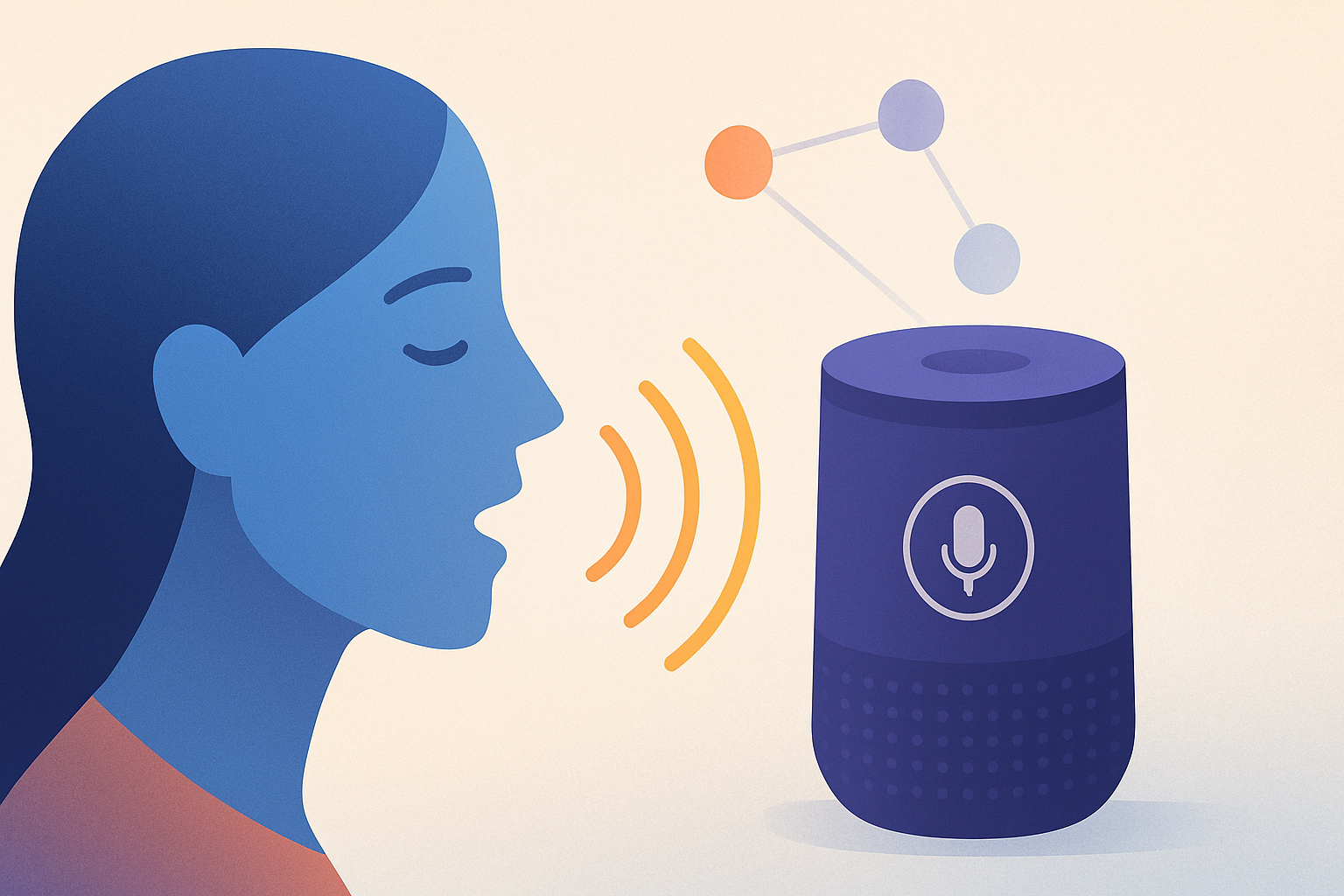
- Speech capture: The device records audio from a microphone.
- Preprocessing: Noise reduction and echo handling improve signal quality.
- Speech-to-text: A model converts spoken words into text.
- Understanding: An AI model extracts intent, entities, and context.
- Dialogue management: The system tracks the conversation state.
- Tool use: If needed, the assistant calls services to complete tasks.
- Text-to-speech: Responses are generated as natural audio output.
- Safety checks: Policies verify sensitive actions and reduce harmful outcomes.
Examples of AI Trends in Voice Technology in Action
Several real-world patterns illustrate where voice technology is heading. Each example reflects a combination of understanding, speed, and safety improvements.
- Smart call assistants: They summarize conversations and propose next steps.
- Multilingual navigation: Drivers receive route updates in real time.
- Meeting intelligence: Voice agents generate action items automatically.
- Home assistants with personalization: They adapt to schedules and preferences.
- Secure voice authentication: Users confirm identity before payments.
FAQs
What are the biggest AI trends in voice technology?
The biggest trends include multimodal context, agentic assistants, improved robustness, and stronger privacy and security. These shifts move voice systems from simple dictation toward full task completion.
How do agentic voice assistants differ from traditional chatbots?
Agentic assistants can plan and use tools to complete actions. Traditional chatbots usually respond with text only, without executing steps across systems.
Is voice AI getting faster?
Yes. Model optimization and streaming pipelines reduce delay. Many systems now respond while audio is still being processed.
Can voice technology be secure against deepfakes?
Vendors use anti-spoofing techniques and liveness detection. Some systems also require multi-factor checks for sensitive operations.
Will voice assistants support more languages soon?
They already do in many regions, and coverage keeps expanding. Progress is improving both accuracy and naturalness across accents and dialects.
Key Takeaways
- Voice technology is becoming a task interface, not just speech transcription.
- Multimodal context and better dialogue memory improve real conversations.
- Agentic capabilities require strong safety and human oversight.
- Privacy controls, authentication, and anti-spoofing are now essential.
- Multilingual improvements expand access globally.
Conclusion
AI trends in voice technology point toward a future where speaking feels as powerful as typing. Systems are moving beyond transcription toward understanding, planning, and action. Meanwhile, privacy and security requirements are rising just as quickly. Therefore, the next wave of voice products will be defined by both intelligence and trust.
For businesses and consumers, the practical impact is clear. Better voice systems will reduce friction, speed up workflows, and make technology more accessible. Over time, voice will likely become a primary interface for everyday tasks. And that shift will reshape how we build, deploy, and govern AI-driven communication tools.