AI Ideas for Building Online Communities
AI can strengthen online communities by personalizing experiences, scaling moderation, improving onboarding, and turning engagement data into action.
Quick Overview
- Use AI to personalize content and member journeys.
- Automate moderation workflows while keeping humans in charge.
- Improve onboarding with AI-powered guidance and FAQs.
- Measure engagement with analytics that translate into better decisions.
Why AI Belongs in Community Building
Online communities thrive on relevance, trust, and momentum. However, many community owners face the same bottlenecks. The workload grows, moderation becomes harder, and new members struggle to find their place.
Meanwhile, community platforms generate constant signals. Posts, comments, reactions, and churn indicators form a real-time feedback loop. AI helps teams interpret that loop faster and act with more consistency.
Importantly, AI is not a replacement for culture. Instead, it supports the human work of building norms, relationships, and shared purpose. When used responsibly, it can increase both belonging and safety.
AI Ideas for Online Communities: Practical Use Cases
Below are community-ready AI ideas you can implement gradually. Each idea is designed to improve member experience while reducing operational drag.
1) Personalize onboarding journeys with “community copilots”
First impressions shape retention. Yet many communities offer the same generic welcome message to everyone. AI can tailor onboarding based on member goals, interests, and activity patterns.
For example, a community copilot can ask a few questions during signup. Then it can recommend relevant channels, pinned discussions, and upcoming events. As members interact, the recommendations can update automatically.
This approach works especially well for niche groups like developer circles, creator communities, or hobbyist forums. Over time, the system helps members “self-route” into productive conversations.
2) Use AI to surface the right discussions at the right time
Community feeds can become overwhelming. Even active members miss important threads. AI ranking and retrieval can solve that problem by highlighting content based on each person’s interests.
Consider building a “for you” stream. It can prioritize posts similar to what a member engages with. It can also boost helpful contributions, not just high-volume ones.
Additionally, AI can summarize long threads. That makes it easier for newcomers to catch up without reading every comment.
If you want to strengthen user experience, you can pair this with how AI is enhancing user experience.
3) Scale moderation with AI-assisted workflows
Moderation is where AI can create the largest operational impact. However, the goal should be assistance, not blind automation. Human moderators should review edge cases and enforce final decisions.
AI can help by triaging reports, detecting toxicity, and spotting spam patterns. It can also flag harassment, prompt violations, or off-topic behavior. Then it can suggest appropriate actions for reviewers.
Start with “soft” enforcement. For example, AI can warn users, request rephrasing, or route questions to guidelines first. This reduces escalation while keeping communities aligned with their standards.
4) Turn FAQs into interactive, community-specific knowledge
Communities often repeat the same questions. Instead of relying on volunteers to answer everything, AI can help create an interactive knowledge layer.
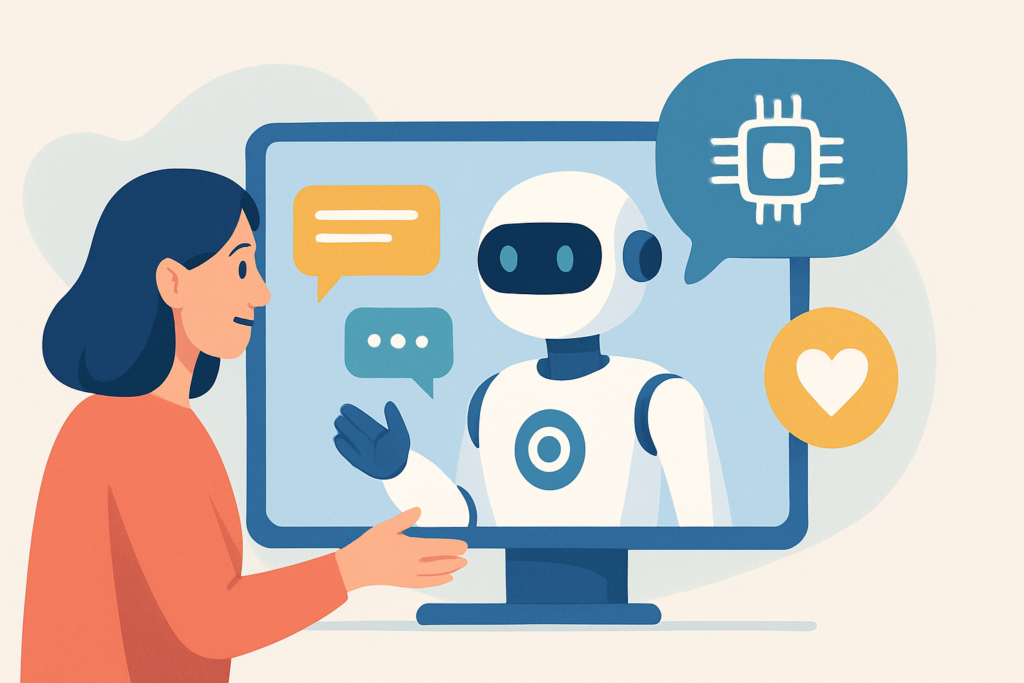
An AI assistant can respond to common queries about rules, scheduling, resources, or etiquette. Crucially, it should cite community policies and point users to real threads. That keeps answers accurate and consistent with your culture.
Over time, the knowledge base improves. Every resolved question can strengthen future responses. This creates a compounding benefit rather than a one-time setup.
5) Create “topic guides” using AI clustering
Many communities suffer from scattered conversations. Threads multiply, but structure stays unclear. AI can group similar discussions into topic clusters.
Once clusters exist, you can generate topic guides. These guides can include summaries, best resources, and starter questions. Then members can quickly jump into a relevant discussion.
This also helps moderators. They can spot repeated issues faster and maintain consistent guidance across topics.
6) Encourage high-quality participation with AI feedback loops
Engagement is more than volume. Quality comments build long-term trust. AI can help members improve by providing constructive feedback on draft posts or replies.
For example, an editor tool can suggest clearer titles, better outlines, or more actionable questions. It can also detect when a reply lacks context. Then it can recommend what to add.
Used carefully, this reduces intimidation. It supports thoughtful participation without turning the community into a rigid classroom.
7) Automate event planning and post-event wrap-ups
Events are powerful community anchors. Yet event operations take time. AI can help with scheduling, reminders, agendas, and recap drafts.
After an event, AI can summarize key takeaways from notes or transcripts. It can also create “next steps” threads for follow-up discussion. This keeps momentum alive beyond the live session.
Also, you can personalize event recommendations based on member interests. That improves attendance and reduces churn from irrelevant programming.
8) Measure community health with engagement analytics and churn signals
AI analytics can move communities from guesswork to strategy. Instead of tracking only basic metrics, you can build health indicators that predict retention.
Common signals include response time, repeat participation, helpfulness scores, and onboarding completion. AI can combine these signals into risk categories. Then the system can trigger targeted interventions.
For example, if a member stops posting after week one, AI can schedule a gentle check-in. It might also suggest a low-friction task, like replying to a beginner question.
For a broader analytics view, see how to use AI for business intelligence.
9) Strengthen member-to-member matching
Communities grow when members find collaborators. AI can match people based on interests, past contributions, and communication style. That can enable mentorship, buddy systems, or project partnerships.
Instead of random pairing, the matching algorithm can optimize for complementarity. For example, beginners can connect to experienced guides. Or researchers can join groups with relevant problem spaces.
Additionally, AI can help craft intros. A good introduction reduces awkwardness and increases the chance of a meaningful conversation.
How It Works / Steps
- Define community goals and rules. Clarify what “good participation” means and how safety is enforced.
- Choose one high-impact workflow. Start with onboarding, moderation triage, or FAQ assistance.
- Collect the right data signals. Use posts, reports, engagement, and onboarding events to guide decisions.
- Implement AI with human review. For sensitive tasks, route outputs to moderators for final action.
- Build a feedback loop. Track accuracy, member satisfaction, and moderation outcomes.
- Expand gradually. Add personalization, summaries, and clustering once the first workflow stabilizes.
- Measure community health. Use retention, participation quality, and churn risk indicators to refine the system.
Examples of AI Community Features
Here are concrete examples you can adapt for different community types:
- For a developer community: AI recommends relevant technical channels and generates “starter” threads for each topic.
- For a creator community: AI helps members find critique partners and summarizes feedback trends after reviews.
- For a customer support community: AI routes questions to known solutions and suggests next-step troubleshooting scripts.
- For an education community: AI creates study guides and identifies which topics members struggle with most.
Even small features matter. For instance, a well-designed thread summary can turn silent readers into engaged contributors.
Ethical and Safety Considerations
Because communities involve real people, AI must be deployed responsibly. Otherwise, mistrust can spread quickly.
Focus on transparency, fairness, and control. Also, design for human oversight in high-stakes scenarios.
Practical safety guidelines
- Use AI for triage, not final judgment. Escalate complex cases to humans.
- Log decisions and provide audit trails. Moderators need context and accountability.
- Protect privacy. Minimize data collection and follow applicable regulations.
- Detect bias and monitor outcomes. Test across languages, demographics, and community subgroups.
- Prevent manipulation. Avoid deceptive engagement tactics or automated “bot-like” behavior.
If you treat AI as a support layer, you can strengthen safety without undermining culture.
FAQs
Can AI replace moderators in online communities?
No. AI can assist with triage, detection, and draft responses. However, human moderators should make final decisions, especially for harassment, bans, and appeals.
What’s the best place to start with AI for a community?
Start with onboarding support or moderation triage. These areas create quick value and reduce operational strain. Then expand into personalization and analytics once your workflows stabilize.
Will personalization feel “creepy” to members?
It can, if done poorly. Use clear explanations and let members control preferences. Also, personalize in ways that improve relevance, not surveillance.
How do we measure whether AI is actually helping?
Track retention, onboarding completion, response times, report resolution speed, and participation quality. Compare results before and after deployment to validate impact.
Do we need large-scale infrastructure to use AI?
Not always. Many community features can begin with hosted AI services and lightweight integrations. Focus on one workflow at a time to manage cost and complexity.
Key Takeaways
- AI can personalize onboarding and improve content discovery.
- Moderation automation works best as a human-reviewed system.
- Knowledge assistants reduce repetitive questions and boost confidence.
- Engagement analytics turn community signals into concrete actions.
Conclusion
AI ideas for building online communities are no longer theoretical. Practical features now help teams onboard members, moderate at scale, and keep conversations useful.
However, success still depends on culture and clear standards. AI should amplify the values you already want: trust, inclusion, and meaningful participation.
Start small, measure outcomes, and iterate. With the right approach, AI can help your community grow faster and feel safer for everyone.
For more strategic AI thinking in business contexts, you might also explore how to use AI for business intelligence alongside your community playbook.