AI Ideas for Online Courses: How to Design Smarter, Engaging Learning Experiences
Online learning has evolved fast. Still, many courses feel static, generic, and disconnected from real progress. That’s where AI ideas for online courses can make a meaningful difference.
In this guide, we explore practical concepts you can apply immediately. We focus on how AI can improve learning design, engagement, and assessment. Also, we’ll cover how course creators can produce content more efficiently.
Whether you teach programming, marketing, or creative skills, AI can help. Moreover, the best results come from pairing AI with clear pedagogy. Let’s get started.
Start With a Learning Goal, Then Add AI to Achieve It
The biggest mistake is adding AI because it sounds futuristic. Instead, begin with learning outcomes. Then map AI features to each outcome.
For example, if learners must practice problem-solving, focus on guided practice. If they must retain knowledge, emphasize spaced review. After that, choose AI capabilities that support those goals.
Here’s a simple framework you can use in course planning.
- Outcome: What should learners do independently?
- Evidence: How will you measure mastery?
- Practice: What activities build competence?
- Support: Where do learners typically get stuck?
- AI role: How can AI personalize or accelerate?
Once you do this, AI stops being a gimmick. It becomes a tool for better instruction.
Personalized Learning Paths That Adapt to Skill Gaps
Personalization is one of the most valuable AI ideas for online courses. Learners rarely start at the same level. Even within one audience, skill gaps appear quickly.
AI can analyze quiz results, assignment attempts, and time-on-task signals. Then it can recommend the next lesson, practice set, or reading. As a result, students spend less time relearning basics.
More importantly, adaptive pathways can reduce frustration. Learners who struggle can receive additional scaffolding. Meanwhile, advanced learners can move faster without waiting.
If you’re exploring this direction, you may also like AI Tools for Content Personalization.
Practical Course Implementation
You don’t need a complex system on day one. Start with lightweight adaptation rules. For example, use AI to classify learner answers and route them accordingly.
Consider these approaches:
- Dynamic module unlocking: Unlock lessons based on mastery thresholds.
- Targeted remediation: Provide short tutorials for specific errors.
- Alternative practice formats: Offer quizzes, mini-projects, or simulations.
- Personal goal setting: Let learners choose objectives aligned to modules.
This structure improves completion rates. It also supports diverse learning speeds.
AI-Powered Assessments That Give Better Feedback
Traditional quizzes often measure recall. However, learners need feedback that improves performance. AI can enhance assessments by offering more diagnostic insights.
For written work, AI can evaluate clarity, structure, argument strength, and alignment. For technical subjects, it can analyze code patterns and reasoning. Then it can suggest targeted revisions rather than generic scores.
This approach supports deliberate practice. It also makes grading faster for instructors.
Design Ideas for Smarter Grading
To make AI grading trustworthy, you need clear rubrics. Define what “good” looks like. Then connect rubric criteria to AI feedback prompts.
- Rubric-based evaluation: Use consistent criteria for every submission.
- Common error explanations: Identify frequent misconceptions and correct them.
- Revision prompts: Encourage learners to improve one specific aspect at a time.
- Confidence calibration: Ask learners to justify answers and reflect on uncertainty.
Additionally, consider human review for high-stakes assignments. This hybrid model balances speed with quality.
Interactive Tutors: Practice Conversations and Step-by-Step Help
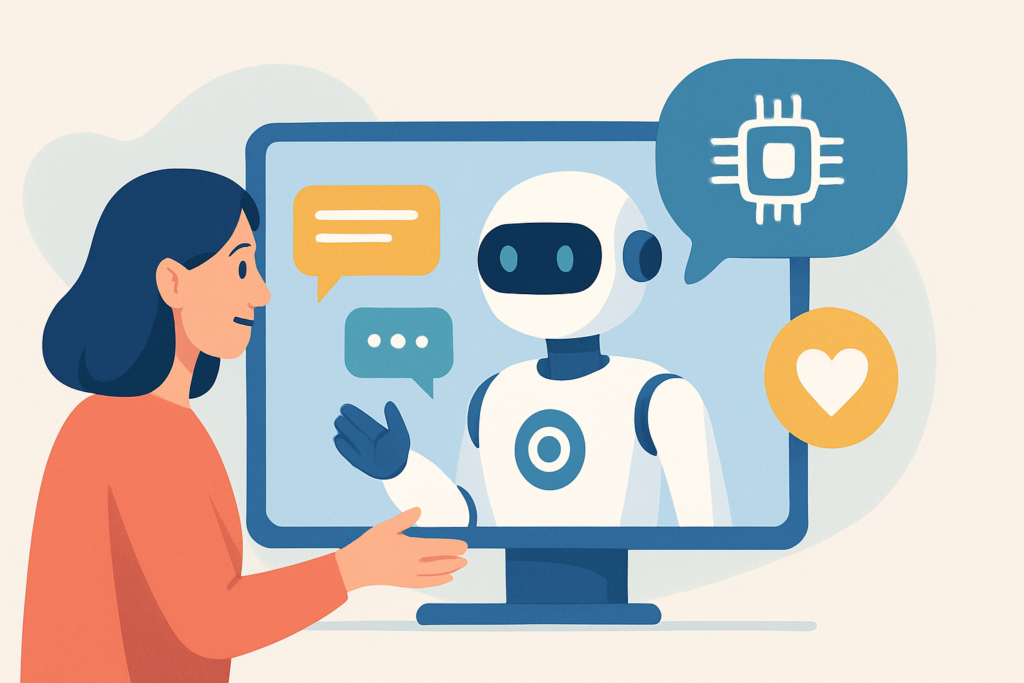
One of the most engaging AI ideas for online courses is interactive tutoring. Instead of waiting for office hours, learners can ask questions as they work.
An AI tutor can explain concepts using multiple perspectives. It can also break tasks into steps. Then it can check understanding with follow-up questions.
However, tutor design matters. If responses are vague, learners lose trust. Therefore, you should build “teaching styles” into the experience.
Ways to Make Tutoring More Effective
Try these methods to improve educational value.
- Context-aware coaching: Let the tutor see the learner’s current attempt.
- Hints instead of answers: Guide learners toward discovery.
- Micro-quizzes: Ask short questions after each explanation.
- Summaries and next steps: End guidance with clear action items.
To keep learners focused, define boundaries for the tutor. For instance, require it to reference course materials. That keeps the learning experience cohesive.
Better Content Creation for Course Creators
AI is not only for learners. It can also accelerate the creation of online courses. Course authors can generate outlines, practice questions, and lesson drafts.
Also, AI can help format content consistently across modules. This reduces editing time and improves readability. As a result, educators can spend more time teaching and less time polishing documents.
Nevertheless, creators must stay in control. AI drafts should be reviewed for accuracy and alignment. Then final content remains trustworthy and on-brand.
Creator Workflow Ideas
Here are practical ways to streamline course production.
- Lesson planning: Generate learning objectives and activities per module.
- Question banks: Create varied practice problems with rubrics.
- Translation and localization: Adapt courses for global audiences.
- Video script assistance: Improve structure, pacing, and clarity.
- Accessibility support: Add captions, alt-text, and simplified summaries.
Content creation becomes faster, but quality must remain the priority.
AI-Enhanced Video Learning and Editing
Video remains central to online courses. Yet many videos are long and passive. AI can help by adding interactive segments and improving post-production.
For example, AI can generate chapter markers from transcripts. It can also create quizzes tied to specific timestamps. Additionally, it can help editors locate moments where retention drops.
If you work with video-heavy lessons, consider Best AI Tools for Video Editing for inspiration.
Engagement Tactics for Video Lessons
Try integrating these learning mechanics directly into your video experience.
- Knowledge checks: Short questions at predictable intervals.
- Interactive captions: Clickable highlights for key terms.
- Auto-generated summaries: Provide takeaways after each segment.
- Scenario replays: Allow learners to repeat examples with guidance.
As a result, learners become active participants instead of spectators.
Content Personalization for Different Learning Styles
Even when two learners complete the same module, their needs differ. Some require extra context. Others need examples and practice. AI can help deliver those variations without creating separate courses.
For example, an AI system can adjust reading difficulty, add analogies, or suggest supplemental resources. It can also recommend different project options based on interest and skill.
That flexibility improves satisfaction. Moreover, it supports learners who learn differently.
Personalization Examples You Can Build
- Multiple explanation modes: “Fast summary” or “deep dive” versions of lessons.
- Resource tailoring: Choose between articles, diagrams, or practice sheets.
- Project customization: Swap examples to match industry preferences.
- Feedback tone adjustments: Offer supportive coaching or concise corrections.
When personalization is done well, learners feel seen. That feeling increases persistence and reduces dropout rates.
AI Ideas for Course Marketing and Student Onboarding
AI can also improve the business side of online courses. Effective onboarding reduces churn. It also helps learners understand expectations early.
AI chatbots can guide prospects to the right course. They can explain prerequisites and expected time commitments. Then they can help learners prepare materials before starting.
For creators, AI can also improve product messaging. It can generate FAQs and refine landing page drafts based on audience intent. However, always review for accuracy and compliance.
If you want to explore measurement and optimization, also consider AI Tools Comparison for Productivity.
Learning Analytics: Use AI to Improve the Course, Not Just Track It
Tracking learner behavior is useful. Yet tracking alone rarely improves outcomes. AI can interpret patterns and translate them into course updates.
For instance, if learners repeatedly fail a quiz question, the course may need clearer instruction. If students abandon videos at a certain timestamp, you may need a tighter narrative. Then iterative improvements can happen quickly.
This creates a feedback loop between data and instruction. Over time, the course becomes more effective.
Analytics Signals Worth Watching
- Drop-off points: Identify where learners disengage.
- Error clusters: Group mistakes by concept.
- Time-to-mastery: Measure how quickly learners improve.
- Practice-to-performance: See if activities lead to better assessments.
With these insights, you can prioritize the highest-impact improvements.
Ethical Considerations and Trust in AI Course Experiences
AI systems must be trustworthy. Otherwise, learners disengage or lose confidence. That’s why ethics and transparency should be part of your design.
First, disclose when AI assistance is used. Second, ensure AI feedback is aligned with course content. Third, protect learner data and follow relevant privacy requirements.
Also, consider bias. If learners see unfair feedback, the learning experience becomes harmful. Therefore, implement human oversight for critical decisions, especially at the start.
Key Takeaways
- Design AI features around specific learning outcomes, not hype.
- Use personalization to adapt paths, remediation, and practice options.
- Upgrade assessments with rubric-based feedback and revision prompts.
- Improve engagement with interactive tutoring and smarter video experiences.
- Use analytics to iterate on instruction, not just report metrics.
Conclusion
AI ideas for online courses are more than futuristic experiments. They are practical strategies for personalization, assessment, tutoring, and content creation. When used responsibly, AI can improve engagement and learning outcomes.
The most effective courses treat AI as a learning partner. Yet they keep educators in charge of pedagogy and quality. Start small, measure results, and iterate.
If you build with learner needs first, your course will feel modern and effective. And more importantly, it will help students succeed.