How to Use AI for Customer Engagement
Customer engagement is no longer just a call center metric. Today, it’s about relevance, speed, and consistency across every channel. AI can help organizations respond faster and tailor experiences at scale. However, successful adoption requires thoughtful design, safe data practices, and measurable goals.
In this guide, we’ll explain how to use AI for customer engagement in a practical, business-focused way. You’ll learn what AI-driven engagement looks like, how it works under the hood, and how to start without disrupting your operations. Along the way, we’ll connect tactics to strategy so your AI projects deliver real outcomes.
What is AI for customer engagement?
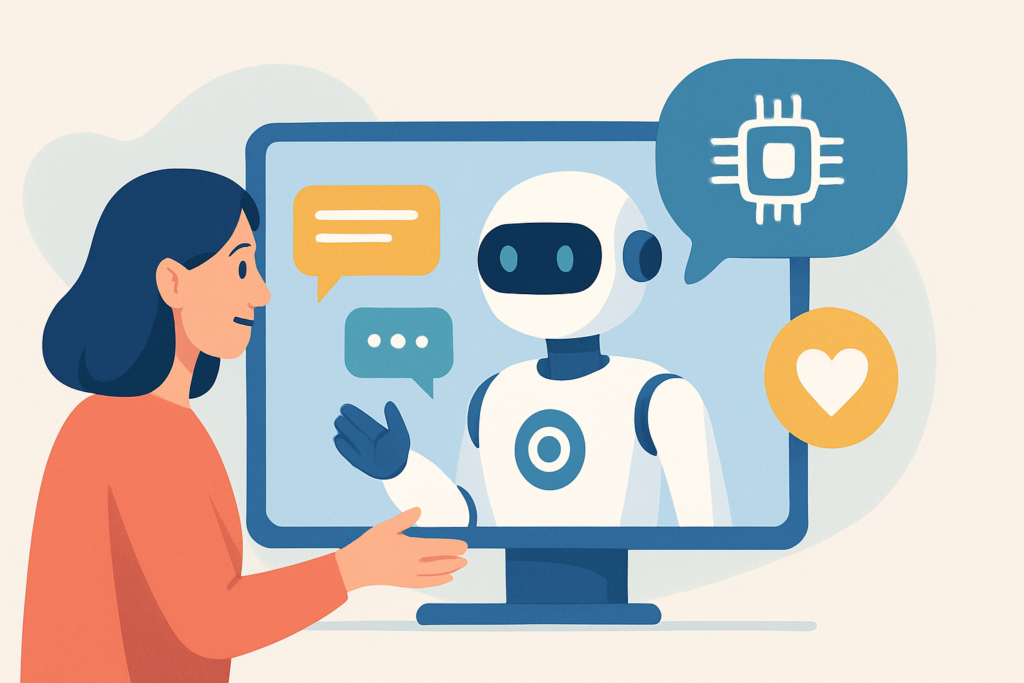
AI for customer engagement uses machine learning, natural language processing, and automation to interact with customers more effectively. It can answer questions, recommend next steps, and adapt messages based on customer behavior. In addition, AI can help teams analyze feedback and detect emerging issues earlier.
Unlike traditional automation, modern AI can handle unstructured inputs. For example, it can interpret chat messages, emails, support tickets, and survey text. Then, it can route requests, generate responses, or summarize context for agents.
Common engagement use cases include:
- Conversational support via chatbots and virtual agents
- Personalized recommendations in emails, apps, and web experiences
- Automated customer service triage using intent detection
- Proactive retention outreach based on churn signals
- Feedback analysis that turns reviews into actionable insights
When done well, AI makes customers feel understood. At the same time, it reduces repetitive work for your support and marketing teams.
How does AI for customer engagement work?
AI customer engagement typically combines several technologies. First, it collects data from customer touchpoints. Then, it processes that data with models that learn patterns. Finally, it uses the results to generate actions in real time.
Here’s a simplified flow you can use to think about implementation:
- Data ingestion: gather signals like chats, ticket history, browsing behavior, and purchase events.
- Understanding: identify intent, sentiment, and topic categories from text and interactions.
- Decisioning: choose the best next step, such as routing, responding, or escalating.
- Response generation: craft replies using templates, retrieval from knowledge bases, or language models.
- Personalization: adjust tone, content, and timing based on customer context.
- Measurement: track outcomes like resolution time, satisfaction, and conversion impact.
Under the hood, systems often use retrieval-augmented generation (RAG). That means the AI pulls relevant knowledge from trusted sources. For example, it can reference policy pages, product documentation, or past resolutions. This approach reduces hallucinations and keeps answers aligned with your business rules.
Additionally, AI can use predictive models. These models estimate likelihood of churn, next purchase timing, or likely support issues. As a result, your engagement becomes proactive rather than reactive.
If you’re planning broader AI initiatives, you may also want to review best AI tools for digital strategy. Those tools often overlap with engagement platforms and analytics.
Why is AI for customer engagement important?
Customer expectations keep rising. People want instant answers and personalized experiences, regardless of channel. Meanwhile, support teams face growing ticket volumes and staffing constraints. AI helps bridge that gap by improving both responsiveness and consistency.
There are several strategic reasons AI matters for engagement:
- Faster resolution: customers get help immediately through self-service or assisted responses.
- Better relevance: recommendations and messages align with real preferences and behavior.
- Scalability: AI can support thousands of conversations without linear staffing growth.
- Operational efficiency: routine questions are automated, freeing agents for complex cases.
- Insight generation: AI converts qualitative feedback into structured themes.
Just as importantly, AI can improve the “handoff” experience. When implemented with agent-assist features, it provides summaries and suggested replies. That reduces time spent searching and keeps responses consistent with your policies.
However, AI’s value depends on execution. If the knowledge base is outdated, responses will be unreliable. If personalization is poorly designed, customers may feel targeted in the wrong way. Therefore, engagement success requires both technology and process discipline.
Is AI better than traditional customer engagement?
AI is not a replacement for great customer service. Instead, it complements traditional engagement methods like live support, email campaigns, and community management. The key advantage is that AI handles certain tasks faster and at larger scale.
Here’s a practical comparison:
- Speed: AI can respond in seconds, while human queues require waiting.
- Consistency: AI can follow consistent knowledge and tone guidelines.
- Personalization: AI can tailor content using behavioral signals more frequently.
- Complexity: humans still excel at edge cases, empathy, and nuanced judgment.
Think of AI as a “support multiplier.” It strengthens your customer-facing operations by reducing friction. Yet, you should design clear escalation paths. When confidence is low, the system should hand off to a human agent quickly.
In many organizations, the best model is hybrid. Customers get instant help for simple questions. Humans step in for sensitive situations, refunds, or complaints requiring discretion.
If you want to connect engagement to product improvements, consider how to use AI for product development. Customer engagement data often becomes the strongest input for product roadmap decisions.
Can beginners use AI for customer engagement?
Yes. Beginners can adopt AI without building complex models from scratch. The fastest route is to start with proven platforms and narrow, high-impact use cases. Also, begin with processes that already produce structured outcomes, like ticket categorization and knowledge management.
Here are beginner-friendly ways to start:
- Start with an AI-enabled knowledge base: ensure articles are current and searchable.
- Deploy intent detection: classify messages into categories to speed routing.
- Use agent-assist summaries: let AI draft context for human review.
- Implement a limited-scope chatbot: focus on FAQs and account basics first.
- Automate follow-ups: trigger emails based on engagement stages.
Next, set guardrails. Define which topics the AI can answer and when it must escalate. Then, measure performance with clear metrics. For example, track deflection rate, first response time, and customer satisfaction scores.
Finally, ensure your team understands AI limitations. Language models can generate plausible but incorrect answers. To reduce risk, use retrieval from approved sources. Also, require human review for high-stakes responses.
If you’re also exploring related areas like user feedback analysis, you might find inspiration in best AI tools for UX research. Many of the workflows transfer directly to customer experience analysis.
Practical steps to implement AI for customer engagement
Implementation succeeds when it’s structured. Follow a phased approach, and treat AI as an operational system. That means governance, testing, and continuous improvement.
1) Identify engagement bottlenecks
Start by mapping your customer journey. Then, locate where customers wait, repeat themselves, or abandon tasks. Common bottlenecks include onboarding confusion, billing issues, and product troubleshooting.
Use historical data to prioritize. Look at ticket tags, contact reasons, and the time-to-resolution distribution. High volume and repetitive issues are excellent first targets.
2) Prepare trusted knowledge
AI needs reliable information. That starts with your documentation and policies. Ensure articles include versions, dates, and clear steps. Also, consolidate duplicates and remove outdated content.
As you prepare your knowledge base, consider content formatting. Short paragraphs and consistent headings improve retrieval quality. Then, AI can cite or align answers with the correct source.
3) Choose the right engagement pattern
Not all engagement requires a chatbot. Depending on your channels and maturity, choose patterns like:
- Self-service automation: chatbots and interactive help flows
- Agent assistance: drafting replies and summarizing conversations
- Personalized messaging: tailored emails and in-app recommendations
- Proactive alerts: notifying customers before issues escalate
Pick one or two patterns for your first release. Then, optimize them before expanding.
4) Add safety, compliance, and escalation
Engagement often involves sensitive customer data. Therefore, define privacy rules and access controls. Also, ensure your system does not request unnecessary personal information.
Set escalation thresholds and response constraints. For example, if the AI cannot find a relevant policy, it should transfer to a human. Additionally, implement logging so you can review and audit outcomes.
5) Measure what matters
AI projects must connect to customer and business metrics. Track both operational and experience outcomes. Examples include:
- First response time
- Resolution rate and deflection rate
- Customer satisfaction and feedback trends
- Conversion lift for tailored offers
- Agent workload reduction
Then, run A/B tests where possible. Compare AI-assisted flows against baseline workflows. Over time, you’ll learn where AI improves results and where it needs adjustment.
Key Takeaways
- AI for customer engagement improves speed, relevance, and scalability.
- Most systems combine intent detection, retrieval, and decision automation.
- Hybrid models work best: AI handles routine issues, humans manage edge cases.
- Start small using intent routing, agent-assist, or a limited-scope chatbot.
- Build trusted knowledge and set safety rules to reduce risk.
When you use AI for customer engagement with a clear plan, you don’t just reduce workload. You also create better customer experiences across every interaction. Next, choose one bottleneck, prepare your knowledge, and measure outcomes. That approach turns AI from a concept into a reliable business capability.