Creative AI Project Ideas for Beginners
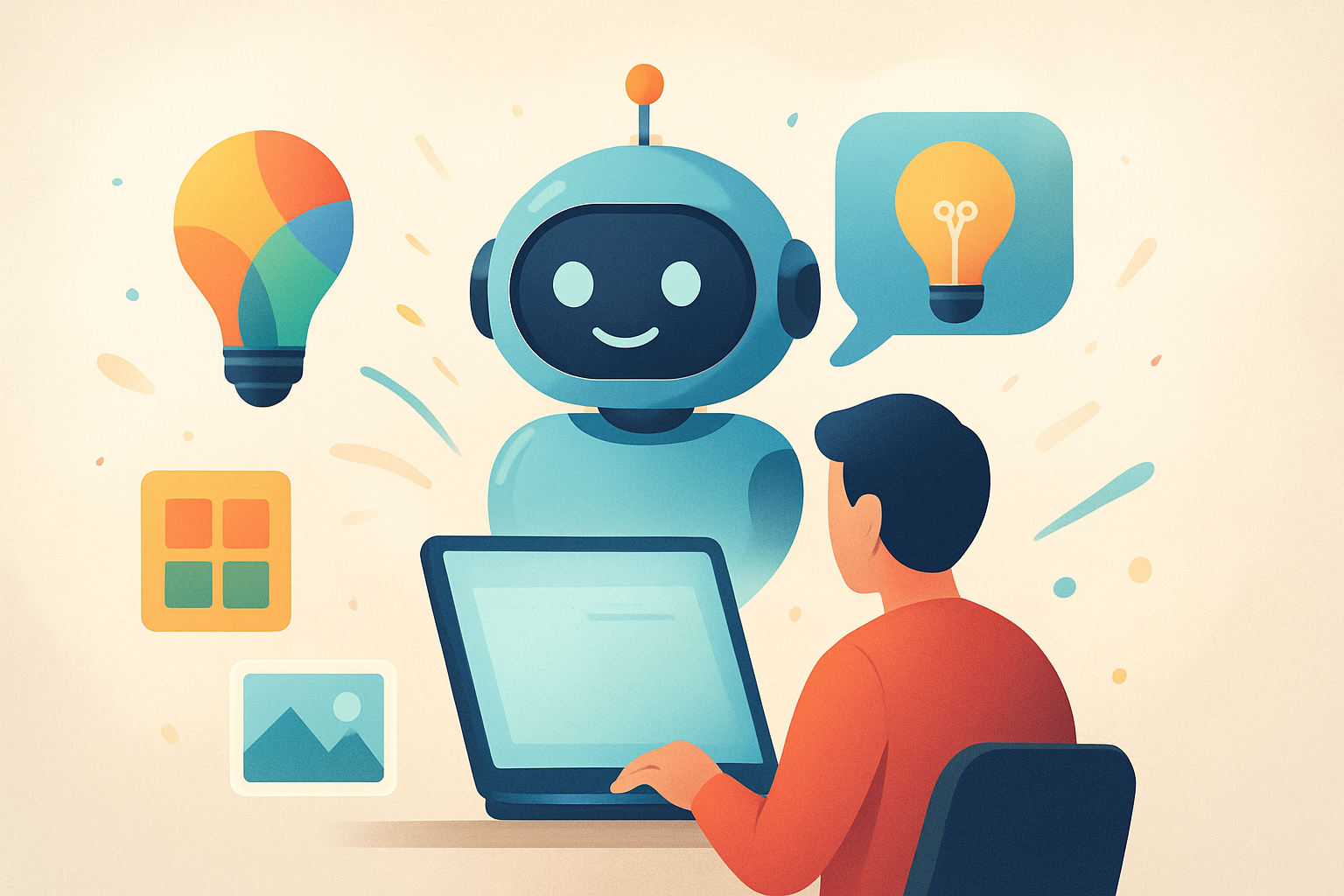
Creative AI Project Ideas for Beginners offers hands-on projects for learners. This article explains practical ideas, tools, and simple roadmaps. You will find projects that teach fundamentals while producing real outputs. Each idea aims to be accessible and inspiring for new learners.
Why creative AI projects help beginners learn faster
Projects make abstract concepts concrete, so beginners understand AI better. Instead of only reading theory, you build something tangible. That motivates continued learning and builds a portfolio. Moreover, small projects clarify which skills need improvement.
Working on creative AI also teaches experimentation and iteration. You learn to test, debug, and evaluate outputs. These habits are essential for any future AI work. Finally, creative projects invite exploration across art, music, and games.
How to choose your first beginner AI project
Pick a project that balances challenge and feasibility. Look for clear inputs and observable outputs, such as image generation or simple chatbots. That reduces ambiguity while showing progress. Also, choose tools that match your technical comfort level.
Consider your goals before you start. Do you want to learn coding, design, or model behavior? For non-coders, many low-code options exist. Meanwhile, aspiring developers can add small scripts or APIs to deepen their learning.
Tools and resources to start with
Begin with accessible tools that simplify common tasks. Low-code apps and free models are great for prototypes. You can gradually move to more advanced frameworks when ready.
For lists of friendly tools, see our guide to Beginner-Friendly AI Tools to Start With. For image projects, review the best options in our piece on Best Free AI Image Generators in 2026. Also consider curated tool lists like Top Free AI Tools You Should Try Today.
Top creative AI project ideas for beginners
Below are project ideas ordered from simplest to more involved. Each idea includes goals, key tools, and extension suggestions. These projects work for learners with different interests.
1. AI-powered image collage generator
Goal: Combine generated or user-supplied images into themed collages. You learn image prompts and simple composition rules. Start by using an image generator to produce assets.
Tools: Free image generators, a simple script for layout, or even Canva for manual assembly. Extend by adding filters or caption overlays.
2. Text-to-image artwork with style toggles
Goal: Generate artworks from prompts and vary the artistic style. This teaches prompt engineering and aesthetic control. You will compare styles and refine prompts for better results.
Tools: Free image generators and prompt templates. Try combining multiple outputs into an animated GIF to showcase variation.
3. Lyric-to-melody composer
Goal: Turn short lyrics into simple melodies using AI. The project introduces sequence models and audio synthesis. You learn to map syllables and emotions to musical elements.
Tools: Beginner-friendly music AI services and DAW software. Extend by adding chord suggestions or exporting MIDI files.
4. AI visualizer for personal data
Goal: Create visual art from personal metrics like step count or mood logs. This combines data processing with creative mapping. The project shows how AI can translate numbers into visuals.
Tools: Spreadsheet data, simple Python scripts, and a generative image API. Add interactivity by building a small web page to explore different visual mappings.
5. Captioning assistant for social posts
Goal: Generate creative captions for images and short videos. You practice controlling tone, length, and hashtags. This project demonstrates practical AI use for creators.
Tools: Text generation APIs and prompt templates. Integrate with scheduling tools to test caption performance in real contexts.
6. Story prompt generator and plot twist suggester
Goal: Help writers by proposing prompts and unexpected twists. You learn to condition models and curate outputs for quality. This project improves narrative creativity and editing skills.
Tools: Text generation models and lightweight front-ends. Add a rating system to learn which prompts perform best over time.
7. Simple chatbot for a hobby or class
Goal: Build a chatbot focused on a specific topic, like gardening or history. You will learn intent design and conversational flow. This teaches practical prompt structuring and user testing.
Tools: Chatbot platforms or a small conversational model. Deploy on a website or messaging app to gather user feedback and iterate.
8. Generative logo idea machine
Goal: Produce logo concepts from brand keywords and colors. You will practice translating brand identity into visual cues. This project is useful for designers and small business owners.
Tools: Image generation tools and mood-board scripts. Refine outputs with a simple evaluation rubric for clarity and uniqueness.
9. AI-assisted game content generator
Goal: Create procedurally generated game elements like levels, dialogue, or NPC names. This teaches constraints and randomness. You will also learn to balance novelty with playability.
Tools: Scripting languages and text generation models. Implement a small playable demo to test how generated content affects gameplay.
10. Interactive poem or haiku creator
Goal: Generate short poems based on user input such as mood or weather. This project emphasizes creativity and brevity. It also practices text conditioning and formatting.
Tools: Text generation models and a simple web interface. Offer multiple poetic styles and let users rate outputs for refinement.
11. Voice-to-avatar storyteller
Goal: Convert short narrated stories into animated avatar scenes. You will combine speech-to-text, text generation, and simple animation. This teaches multimodal pipelines and synchronization.
Tools: Speech recognition APIs, text-to-image or animation tools. Start with scripted scenes and expand to live recording later.
12. Ethical AI explainability demo
Goal: Build a small demo that explains why an AI made a certain creative decision. This project focuses on transparency and responsible AI. You will learn to present model reasoning in simple language.
Tools: Models that provide token-level outputs and visualization libraries. Use this project to discuss bias, limitations, and mitigation strategies with users.
- Choose a single output type to simplify testing.
- Start with templates and modify them iteratively.
- Record experiments to track what works and why.
Getting started: a simple step-by-step beginner workflow
Follow an iterative workflow to complete any project. Start small, test often, and avoid perfectionism in early stages. This approach reduces friction and keeps momentum high.
Step 1: Define a clear, minimal goal for the first prototype. Step 2: Pick a tool that matches your skill level and budget. Step 3: Build a prototype that produces visible outputs quickly.
Step 4: Evaluate results with simple metrics or human feedback. Step 5: Iterate on prompts, parameters, or data until outputs improve. For automation and deployment details, see our Step-by-Step Guide to AI Automation.
Tips for learning while building
Balance breadth and depth during early projects. Try different modalities like text, image, and audio. Yet, dig deeper into one project to gain mastery over time.
Document your process and challenges. This helps future you and builds a portfolio. Also, share your work with communities to get constructive feedback.
Key Takeaways
- Start with small, goal-focused creative AI projects to learn quickly.
- Use beginner-friendly tools and free generators to prototype ideas fast.
- Iterate based on outputs and user feedback while documenting progress.
Conclusion
Creative AI project ideas for beginners are an effective path to learn AI hands-on. These projects combine skill building with portfolio-worthy outputs. Moreover, they promote experimentation across art, music, games, and practical apps. Begin with a simple goal, pick accessible tools, and iterate steadily to grow your skills.