AI Trends in Fintech You Can’t Ignore
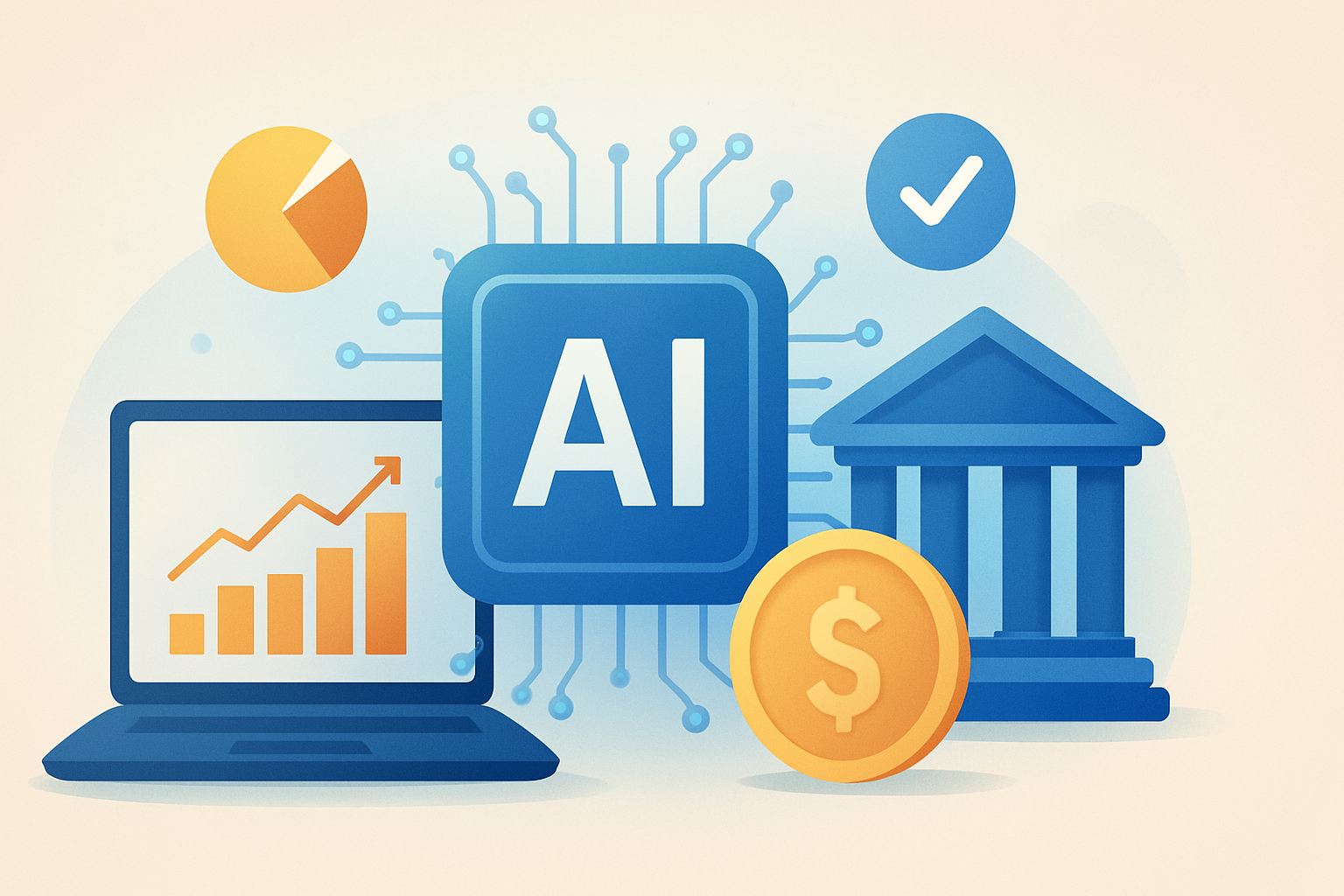
AI is becoming the backbone of modern fintech. Key trends include smarter fraud detection, real-time risk scoring, personalized financial experiences, and automation for compliance and operations.
Quick Overview
- AI-driven fraud detection is shifting toward real-time, behavior-based models.
- Risk scoring is becoming more granular using alternative data.
- Personalization is improving customer experience with adaptive financial guidance.
- RegTech automation is reducing compliance workload and improving audit readiness.
- AI is increasingly used to streamline onboarding, underwriting, and customer support.
Why AI Is Reshaping Fintech Now
AI is no longer an experimental feature in fintech. Instead, it is a core capability used across the customer journey. From onboarding to fraud prevention, financial institutions need faster decisions and better detection. At the same time, they must manage tighter regulations and growing data volumes.
As a result, fintech teams are investing in machine learning platforms and data pipelines. They are also building model monitoring and governance practices. Consequently, the “AI trend” is shifting from pure model building to production reliability. This includes interpretability, performance tracking, and responsible deployment.
Moreover, customer expectations are rising. People want instant answers and tailored insights. They also expect fewer friction points during account opening and loan applications. AI helps meet these demands by improving both speed and relevance.
Trend 1: Real-Time Fraud Detection with Behavioral AI
Fraud is one of fintech’s most urgent problems. Traditional rules-based systems often miss new attack patterns. However, AI can learn from historical fraud signals and emerging behavior patterns. Therefore, fraud detection is becoming more dynamic and faster.
What’s changing
In many deployments, models now operate continuously instead of relying on nightly batch scoring. They analyze device signals, transaction metadata, and user behavior. Then they generate risk scores within milliseconds. Additionally, teams are using anomaly detection to spot unfamiliar patterns early.
- Behavior-based features replace static rules
- Streaming models reduce decision latency
- Adaptive thresholds respond to shifting fraud tactics
- Human-in-the-loop review improves accuracy over time
Journalistic takeaway
Fraud prevention is evolving into an always-on “trust layer.” Instead of just blocking bad transactions, systems aim to verify legitimacy continuously. That is why AI fraud tools now emphasize explainability and audit trails. These features help teams justify decisions to both regulators and customers.
Trend 2: Smarter Risk Scoring and Underwriting
Risk scoring is central to lending, payments, and credit products. Historically, underwriting relied on limited credit bureau data. Today, AI enables more granular assessments using alternative data sources. However, this also increases the need for careful model governance.
For example, machine learning can incorporate cash flow patterns, transaction consistency, and account engagement. As these signals grow, underwriting can become more responsive. It can also support more inclusive lending strategies when implemented responsibly.
Key developments
Several patterns stand out across the industry. First, models increasingly focus on repayment capacity rather than only credit history. Second, teams are using model ensembles to reduce bias and improve robustness. Third, underwriting workflows integrate with identity verification tools.
- Alternative data supports earlier risk assessment
- Model ensembles improve stability
- Explainable outputs support decision review
- Automation speeds up approvals
Importantly, responsible use matters. Fintech companies must avoid unfair discrimination and ensure data quality. Consequently, underwriting AI is becoming inseparable from compliance engineering.
Trend 3: Personalization in Banking and Wealth Management
Personalization is becoming a competitive differentiator in fintech. AI can tailor product recommendations, content, and alerts to individual users. This improves engagement and can reduce costly user churn. Meanwhile, customers want actionable guidance, not generic dashboards.
How personalization shows up
Many fintech experiences now adapt in real time. If spending rises unexpectedly, the system can suggest budgeting strategies. If a customer’s goals change, the recommendations can update. Similarly, wealth platforms can generate scenario planning based on user preferences.
- Personalized insights and spending summaries
- Goal-based savings guidance
- Adaptive risk education for investors
- Context-aware notifications that avoid spam
Nevertheless, there are risks. Over-personalization can feel intrusive. Therefore, good systems provide transparency and control. They also let users adjust preferences and data usage.
If you want deeper context, you may also find this useful: How to Use AI for Market Research. It explains how fintech teams validate personalization strategies using data-driven research.
Trend 4: RegTech Automation with AI-Enhanced Compliance
Compliance demands grow every year. Fintech companies must meet AML, KYC, privacy, and reporting requirements. Manual processes are expensive and prone to delays. AI can help by automating parts of compliance workflows and improving documentation quality.
In practice, AI tools can assist with policy mapping, transaction monitoring support, and report preparation. They can also summarize evidence for audits. As a result, teams spend less time searching across systems.
Where AI is used in compliance
RegTech automation often targets high-volume tasks. Those tasks include document verification, case summarization, and anomaly triage. Additionally, language models can transform unstructured text into structured fields. This makes downstream reporting easier.
- Document extraction from IDs and forms
- Case summarization for faster review
- Policy and control mapping to reduce gaps
- Monitoring support to prioritize investigations
However, regulators still expect accountability. Therefore, fintech firms must maintain human oversight and audit-ready logs. They also need strong data governance and model documentation.
Trend 5: Conversational AI and Agentic Customer Support
Customer support is a major cost center in fintech. At the same time, response time strongly affects trust. AI assistants are now used to handle common questions and guide customers through troubleshooting. Moreover, they can help users understand fees, transfers, and account changes.
More recently, “agentic” systems are emerging. Instead of only answering questions, agents can take structured actions. For example, they might initiate a refund workflow or explain verification steps. Then they can escalate complex cases to humans with context.
What makes it effective
The best deployments connect AI to internal tools and knowledge sources. That includes account data access, policy documentation, and product terms. Additionally, successful systems focus on safe boundaries. They prevent agents from making unauthorized changes.
- Retrieval-augmented answers from trusted company sources
- Action workflows with approval steps
- Guardrails to prevent unsafe or incorrect behavior
- Session continuity for smoother user journeys
This trend also overlaps with developer tooling. If you’re building AI features in-house, see: Top AI Tools for Developers. It highlights categories that support deployment and monitoring.
Trend 6: AI-Driven Operations and Financial Back Offices
Fintech operations include reconciliation, dispute handling, and internal analytics. These processes require accuracy and timeliness. AI can reduce manual effort by extracting signals from documents and transaction narratives. It can also suggest next steps for investigators and operations teams.
Operational wins fintech teams pursue
Many organizations aim to reduce cycle times. They also want fewer errors and less rework. Therefore, AI systems support better classification and routing. In disputes, AI can summarize case histories and highlight relevant evidence.
- Automated document classification
- Improved reconciliation suggestions
- Dispute summarization and evidence extraction
- Workflow routing based on predicted outcomes
As a result, back-office work becomes more scalable. Additionally, teams gain better visibility into bottlenecks. That enables continuous improvement using measurable operational metrics.
How It Works / Steps
- Data collection and labeling: Teams gather transaction logs, user behavior signals, and compliance artifacts.
- Feature engineering: They convert raw data into model-ready signals like velocity, device traits, and text embeddings.
- Model training: Fintech firms train classifiers, anomaly detectors, and language tools using historical outcomes.
- Validation and bias checks: They test performance across segments and evaluate fairness and drift.
- Deployment with controls: Models go live behind APIs with rate limits, access control, and monitoring.
- Real-time scoring and review: Systems score events instantly, then route exceptions to humans.
- Ongoing monitoring: Teams track accuracy, drift, and incident logs to maintain reliability.
- Governance and reporting: They document decisions and keep audit-ready evidence.
Examples of AI Trends in Fintech
These trends show up in recognizable product patterns. For instance, payment apps increasingly use machine learning to evaluate suspicious activity. Then they apply step-up verification when risk rises. Meanwhile, lending platforms can use AI to model repayment likelihood based on cash flow data.
In wealth management, robo-advisors and hybrid advisors often use AI to tailor portfolios. They may incorporate tax optimization scenarios and goal-based contribution strategies. Elsewhere, fintechs use conversational AI to reduce support tickets. They also connect assistants to internal case management systems.
Finally, compliance platforms increasingly offer AI-assisted investigation. Investigators receive structured summaries and recommended next actions. Consequently, case review becomes faster and more consistent.
FAQs
Are AI trends in fintech only for large banks?
No. Many startups use AI via cloud platforms and managed services. However, smaller firms often start with narrow use cases like support automation or document processing.
How do fintech companies manage bias and fairness in AI models?
They run fairness evaluations, segment testing, and data quality checks. They also document model assumptions and implement monitoring for drift over time.
Will AI replace human jobs in fintech?
It is more likely to reshape roles than eliminate them. Many teams use AI to handle repetitive tasks, while humans focus on exceptions and high-stakes decisions.
What is the biggest risk when adopting AI in finance?
The biggest risk is deploying models without governance. That includes weak monitoring, poor documentation, and insufficient human oversight.
How can fintech teams start without building everything from scratch?
They can begin with focused pilots and proven model categories. Then they integrate gradually with internal tools and compliance workflows.
Key Takeaways
- AI in fintech is moving toward real-time decisioning and continuous monitoring.
- Fraud detection and underwriting are becoming more behavior-driven and granular.
- Personalization is improving customer experiences, but transparency is essential.
- RegTech automation reduces workload while increasing audit readiness.
- Agentic customer support can boost efficiency when guarded properly.
Conclusion
AI trends in fintech are no longer limited to flashy pilots. Instead, they are reshaping the fundamentals of payments, lending, compliance, and customer engagement. Real-time fraud detection, smarter risk scoring, and automated compliance workflows are becoming standard expectations.
At the same time, the industry is learning hard lessons about governance. Reliable AI requires monitoring, explainability, and careful risk management. Ultimately, fintech companies that balance innovation with accountability will move faster—and earn lasting trust.