AI in Energy Sector: Future Trends
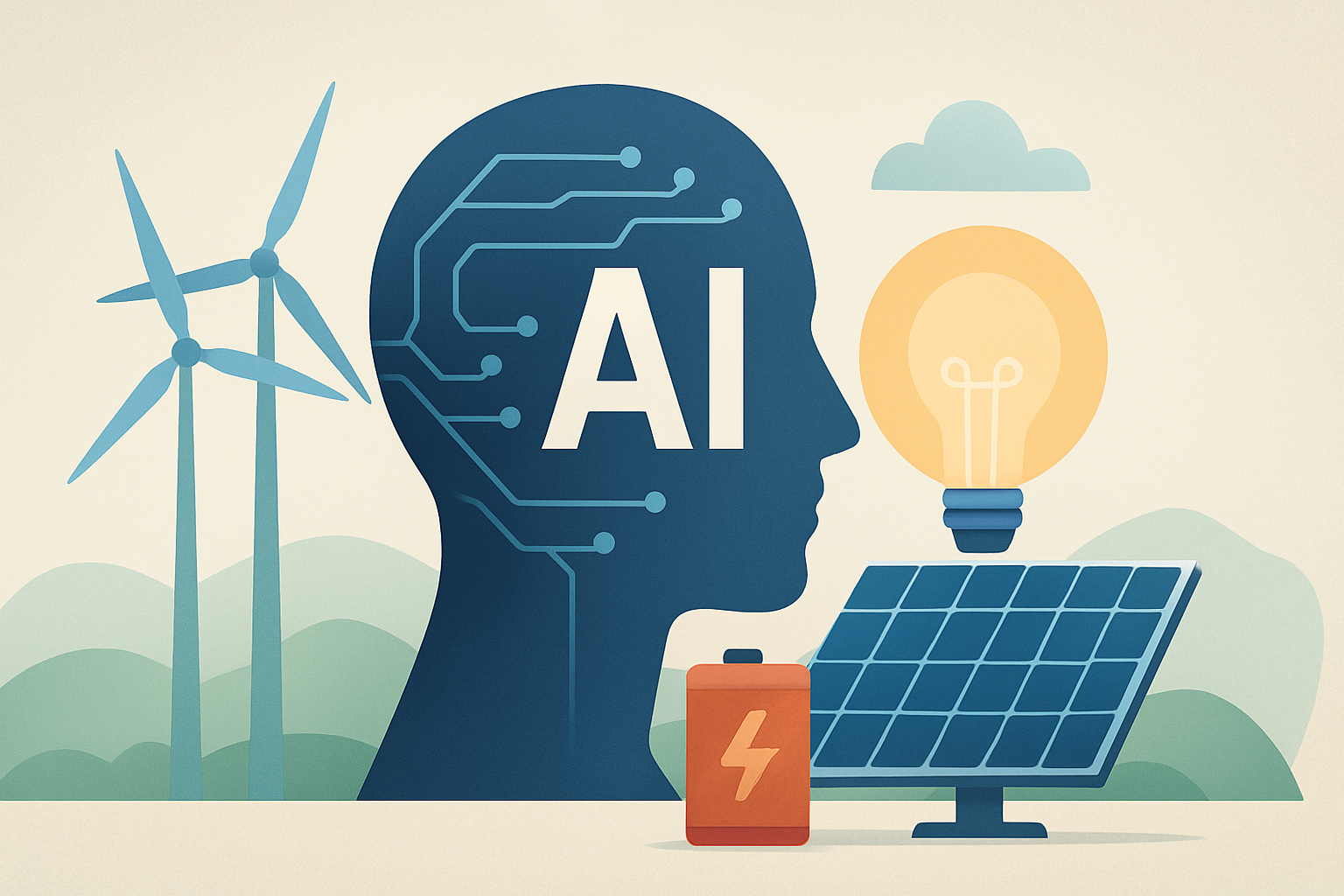
AI will reshape the energy sector through smarter grids, predictive operations, and faster decisions. These trends will improve reliability, cut costs, and accelerate decarbonization.
Quick Overview
- AI will optimize grids in real time using advanced forecasting and control.
- Predictive maintenance will reduce downtime across generation, transmission, and distribution.
- Demand forecasting will become more accurate using weather, pricing, and mobility signals.
- Cybersecurity and regulation-aware AI will grow in importance as attack surfaces expand.
AI in Energy Sector: Why the Next Wave Matters
Energy systems are changing faster than many industrial frameworks were designed to handle. Renewable generation is increasing, grids are becoming more distributed, and demand patterns are shifting due to electrification. Meanwhile, utilities must manage aging infrastructure under rising performance expectations.
Artificial intelligence is emerging as a practical tool for managing that complexity. It helps operators detect issues early, allocate resources intelligently, and respond to events with greater speed. Additionally, AI can support planning teams with scenario modeling and risk assessment.
However, the future is not only about deploying models. The next wave focuses on integration, governance, and measurable outcomes. Therefore, successful AI adoption will depend on data quality, engineering discipline, and transparent decision-making.
Future Trends: How AI Will Evolve in Energy
Several AI trends are moving from experimentation to operational use. These changes will influence both day-to-day operations and long-term investment decisions. Importantly, they will also affect customer experience, market participation, and environmental impact.
1) Real-Time Grid Optimization and Autonomous Control
Traditional grid control relies on rule-based systems and human-in-the-loop procedures. Those methods can be slow when conditions change rapidly. With more solar and wind feeding the network, balancing supply and demand becomes harder.
AI can improve this situation by learning system dynamics from historical and streaming data. For example, reinforcement learning and model-based control can propose switching actions, setpoints, and dispatch strategies. Yet, safe operation is essential, so utilities must design constraint-aware algorithms.
As a result, future systems will likely blend AI with existing control frameworks. In other words, AI will suggest actions, while verified constraints prevent unsafe behavior.
2) Predictive Maintenance at Scale
Maintenance is expensive and disruptive. Equipment failures can cause outages, safety risks, and major repair costs. Therefore, predictive maintenance has become one of the most valuable AI applications in the sector.
Machine learning models can analyze vibration, temperature, acoustic signals, and operational logs. They can also incorporate weather conditions and usage patterns. Consequently, utilities can schedule interventions before failures occur.
In the future, predictive maintenance will expand from single assets to fleet-wide optimization. Utilities will compare failure likelihood, maintenance windows, and inventory constraints together.
3) More Accurate Demand Forecasting for a Changing Load Profile
Demand forecasting is shifting because consumer behavior and technology adoption are changing. Electric vehicles, heat pumps, and distributed storage alter load patterns throughout the day. Prices and incentives also influence usage.
AI can ingest more signals than legacy forecasting tools. It can use weather models, tariff structures, occupancy patterns, and market indicators. Additionally, it can update predictions continuously as new data arrives.
Better forecasts support more efficient generation scheduling and procurement decisions. Moreover, they can help reduce reliance on peaker plants, which supports decarbonization.
4) AI-Driven Integration of Renewables and Storage
Renewables add volatility to power systems. Storage systems can buffer that variability, but they must be controlled properly. Otherwise, assets may underperform or degrade faster than expected.
AI can help by optimizing charging and discharging strategies. It can also coordinate renewable output with grid constraints, such as congestion and voltage limits. Over time, these systems can learn site-specific performance characteristics.
Still, integration requires careful modeling of uncertainty. Therefore, future AI will rely more on probabilistic forecasts and scenario-based decision engines.
5) Energy Market Participation and Price Forecasting
Utilities and energy traders use forecasts to plan bids and dispatch actions. Market dynamics can move quickly, especially during extreme weather. AI can improve price forecasting by analyzing bid curves, generation availability, and demand signals.
In addition, AI can support strategy selection under uncertainty. It can evaluate multiple scenarios and estimate risk-adjusted outcomes. Consequently, teams can make faster decisions while controlling for downside exposure.
This trend will likely grow as market structures become more dynamic and data-rich.
6) Safety, Compliance, and Regulation-Aware AI
Energy is regulated, and mistakes can be costly. Therefore, AI systems must align with operational standards, safety requirements, and auditability rules. The next stage of AI adoption will emphasize governance and model transparency.
Techniques such as explainable AI and model monitoring will become more common. Utilities will also maintain traceability from data sources to model outputs. This helps operators verify recommendations and handle incidents responsibly.
As a result, the future will reward teams that pair engineering with compliance expertise.
7) AI Cybersecurity for Critical Infrastructure
As grids connect more devices, attack surfaces expand. This includes substations, control systems, and remote monitoring platforms. AI can help defenders by detecting anomalies and improving incident response.
Machine learning models can flag unusual traffic patterns or suspicious control commands. Meanwhile, predictive techniques can estimate the potential impact of specific vulnerabilities. However, attackers may also use AI, so defenders need continuous improvement.
Ultimately, cybersecurity will become a standard requirement for any AI deployment in energy.
How It Works / Steps
- Data foundation: Consolidate telemetry, maintenance logs, and operational records into reliable pipelines.
- Feature engineering: Build inputs that reflect physical realities, such as temperature cycles or load conditions.
- Model selection: Choose approaches aligned with the task, like forecasting, classification, or control.
- Validation and testing: Evaluate performance under normal and extreme scenarios before deployment.
- Operational integration: Connect models to asset management systems and control workflows.
- Monitoring and governance: Track drift, accuracy changes, and decision quality over time.
- Human oversight: Keep safety checks and escalation paths for high-impact recommendations.
Examples of AI Use Cases in the Energy Sector
AI deployments vary by asset type and business goal. Some organizations focus on faster detection of issues, while others prioritize optimization and cost reduction. Below are practical examples that reflect emerging industry patterns.
- Grid operators: AI tools detect instability risks and recommend corrective switching actions.
- Wind and solar operators: Models forecast output and optimize curtailment decisions.
- Transmission teams: Predictive systems identify transformer health risks before failures occur.
- Utilities and traders: Price forecasting supports dispatch, bidding, and hedging strategies.
- Field technicians: Computer vision helps verify equipment conditions during inspections.
For a broader view of how automation is progressing across industries, see Step-by-Step Guide to AI Automation. Those fundamentals help teams avoid common integration mistakes.
In addition, data and infrastructure decisions can mirror other sectors’ real-time challenges. If you are exploring adjacent technology domains, you may find How AI Is Transforming Logistics useful.
Why Cloud and Edge Computing Will Influence Outcomes
Many AI models require substantial compute for training, while operational decisions often need low latency. Therefore, the architecture will increasingly split across cloud and edge environments.
At the edge, models can process sensor streams locally for faster detection. Meanwhile, the cloud can handle large-scale training, analytics, and model governance. This hybrid approach reduces bandwidth use and improves resilience.
Furthermore, utilities will likely adopt better orchestration for pipelines and model lifecycle management. That means fewer manual steps and more repeatable deployments across regions.
If you are evaluating cloud-first strategies for AI, read Top AI Trends in Cloud Computing to understand how infrastructure choices shape deployment speed.
Challenges Utilities Must Solve Before Scaling AI
AI adoption can fail when expectations exceed data reality. Energy environments can be noisy, and labeling can be difficult. Consequently, utilities must approach scaling carefully.
The biggest challenges often include the following:
- Data quality and availability: Missing telemetry or inconsistent sensor calibration reduces reliability.
- Integration complexity: Models must plug into control systems and workflows safely.
- Model drift: Equipment behavior changes over time due to wear and operational shifts.
- Explainability needs: Operators require clear reasoning for high-impact decisions.
- Security risks: Systems must resist tampering and protect sensitive operational data.
Addressing these challenges early can prevent costly rework later. In practice, success comes from building strong engineering foundations and governance.
FAQs
Will AI replace human operators in the energy sector?
Not in the near term. AI will typically support decision-making, improve detection, and automate routine actions. Human operators remain essential for safety, oversight, and exceptions.
What types of energy assets benefit most from AI?
Assets with frequent sensor data are strong candidates, such as transformers, turbines, and grid components. However, even non-sensor workflows can benefit through forecasting and planning models.
How do utilities ensure AI recommendations are safe?
Utilities use constraint-aware models, simulation testing, and approval workflows. They also monitor model outputs and require escalation for uncertain cases.
Is predictive maintenance the only AI opportunity in energy?
No. Demand forecasting, grid optimization, renewable integration, and cybersecurity are all major opportunities. Many benefits come from combining these use cases.
Key Takeaways
- AI in the energy sector is moving toward real-time optimization and safer automation.
- Predictive maintenance and forecasting will deliver immediate operational value.
- Governance, safety, and cybersecurity will determine which deployments scale successfully.
- Hybrid cloud-edge architectures will support both training and low-latency decisions.
Conclusion
AI in the energy sector is no longer a concept. It is becoming a core operational capability for forecasting, maintenance, and control. At the same time, future trends will emphasize governance, safety, and secure integration.
Energy companies that invest in data pipelines, model monitoring, and compliance-ready systems will gain a durable advantage. Meanwhile, those that treat AI as a one-time pilot may struggle to scale outcomes. Therefore, the most successful strategies will connect AI to measurable performance metrics.
In the coming years, the grid will become more intelligent and more responsive. AI will be a central driver of that transformation, helping power systems run reliably through uncertainty.