AI Trends in Space Exploration: How Machine Learning Is Changing Missions, Safety, and Discovery
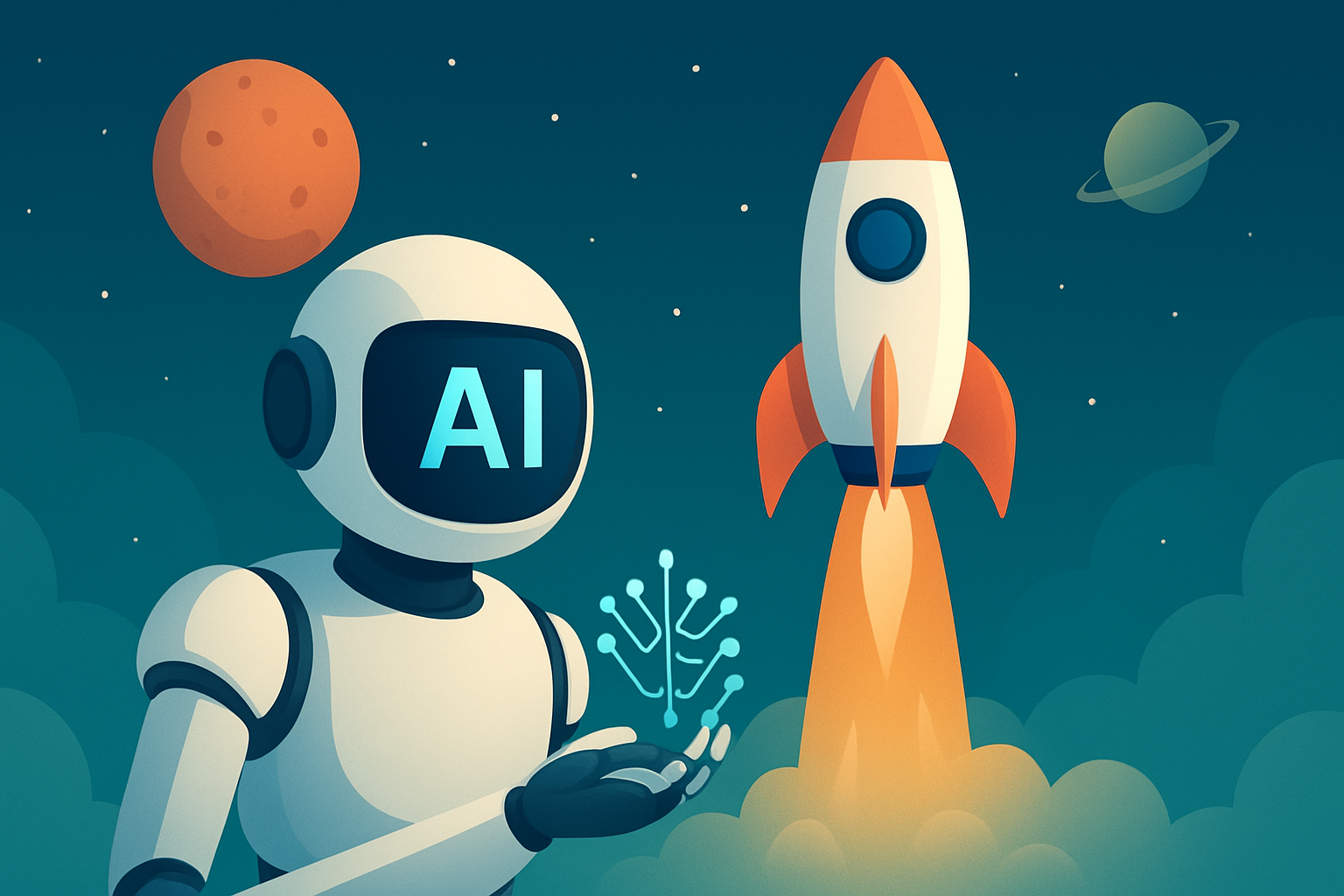
AI is becoming a core capability for space exploration. It improves autonomy, boosts mission safety, and accelerates scientific discovery through better planning and onboard intelligence.
Quick Overview
- AI enables real-time decision-making on spacecraft with limited communication.
- Machine learning supports autonomous navigation and robust fault detection.
- AI-driven science pipelines can prioritize targets and analyze data faster.
- Human oversight remains essential for ethics, safety, and mission reliability.
AI Trends in Space Exploration: Why Now?
Space exploration has always depended on advanced software. However, the newest trend is shifting that software toward AI-driven autonomy. As missions grow more complex, teams need systems that can adapt under uncertainty.
Meanwhile, data volumes are exploding. Modern telescopes and spacecraft instruments generate high-resolution outputs constantly. Therefore, traditional pipelines often struggle to keep pace, especially during time-critical events.
Finally, communication delays shape everything. For deep-space missions, sending instructions in real time is impossible. As a result, spacecraft must interpret conditions and act independently. This is where AI trends in space exploration become central.
From Ground-Control Systems to Onboard Intelligence
Historically, spacecraft relied on preplanned commands and ground-based supervision. Today, AI is helping to reduce that dependency. Instead of waiting for new instructions, systems can plan and execute tasks onboard.
This shift is especially important for autonomy. It also improves reliability when communications degrade or fail. Furthermore, autonomy can shorten mission timelines because fewer operations depend on ground scheduling.
Autonomous navigation and guidance
Navigation is one of the most visible areas for AI adoption. Traditional navigation uses physics-based models and estimation filters. Yet, AI can supplement those models with pattern recognition and anomaly detection.
For example, machine learning can help interpret star-field images faster. It can also detect attitude drift or unexpected pointing behavior. Consequently, the spacecraft can correct course sooner.
In addition, AI can support safer maneuver planning. It can evaluate options based on constraints like fuel limits and risk thresholds. This improves how missions handle dynamic environments.
Fault detection and predictive maintenance
Spacecraft operate in harsh conditions. They face radiation exposure, thermal cycling, and mechanical stress. Therefore, failures can emerge gradually before they become critical.
AI is useful for identifying early warning signs. It can compare sensor patterns against learned normal behavior. Then it can flag deviations for review or trigger protective actions.
Over time, this helps reduce mission downtime. It also improves the odds of survival for long-duration spacecraft.
Robust scheduling under uncertainty
Mission planning is rarely straightforward. Weather, instrument health, and orbital constraints all affect operations. With AI, planners can optimize schedules based on real-time conditions.
Machine learning can also prioritize scientific tasks. For example, it might choose observations that yield the highest scientific value given limited time. As a result, teams can capture more insight during narrow windows.
AI for Scientific Discovery: Turning Data into Decisions
Space missions produce more than engineering telemetry. They produce the raw material for discovery. Therefore, another major trend is AI-driven science pipelines.
These systems can classify objects, detect features, and rank targets. They can also reduce the amount of data that must be transmitted. That matters because bandwidth is often scarce.
Computer vision for telescopes and landers
Computer vision is increasingly common in space science. It helps identify geological formations and atmospheric patterns. It can also detect transient events like flares or unusual eclipses.
In lander missions, AI can interpret camera feeds onboard. Then it can guide sampling operations. Instead of following a rigid plan, the mission can respond to what it sees.
Importantly, these systems are designed for reliability. They often use uncertainty estimates to avoid overconfident actions.
Natural language processing for mission documentation
AI trends in space exploration are not limited to sensor data. Natural language processing can help teams manage mission knowledge. It can summarize logs, interpret reports, and improve search across documentation.
This can streamline operations during anomalies. It can also support new teams joining ongoing programs. As missions become more collaborative, knowledge management becomes more valuable.
Edge AI in Space: Intelligence Where It Matters
Edge AI refers to AI models running directly on hardware. For space systems, this means running AI on spacecraft computers. Since latency is unavoidable, edge inference is often the best option.
However, edge AI introduces unique engineering challenges. Compute power, memory limits, and energy constraints all matter. Therefore, developers must optimize models for size and efficiency.
In practice, edge AI often uses smaller models and careful quantization. It may also rely on hardware accelerators built into onboard systems.
Why edge AI improves resilience
Running AI onboard reduces dependency on constant connectivity. It also prevents the mission from stalling when bandwidth drops. In addition, onboard intelligence can support continuous monitoring.
For example, if an instrument begins producing abnormal readings, AI can detect it quickly. Then it can switch to safe modes or adjust observation schedules. Consequently, the mission becomes more robust.
Human-AI Collaboration: Oversight Still Wins
Despite rapid progress, AI is not a replacement for human expertise. In space exploration, safety and accountability are non-negotiable. Therefore, modern designs emphasize human-in-the-loop systems.
In these models, AI proposes actions. Humans validate critical choices. Meanwhile, AI handles time-sensitive tasks at the edge.
Additionally, teams must address interpretability. Engineers need to understand why a model made a decision. This helps with debugging, safety approvals, and long-term maintenance.
Ethics and mission governance
Ethical concerns arise when AI controls high-stakes operations. For example, an autonomous system could inadvertently cause harm to a scientific instrument. It could also misclassify signals that drive costly decisions.
To manage this, developers set guardrails. They enforce constraints like safe trajectories and conservative thresholds. They also require model validation and testing across simulated scenarios.
Finally, governance includes documentation. Teams track datasets, version models, and monitor performance over time.
AI and Mission Planning: Smarter Orbits, Better Experiments
Another trend involves mission planning optimization. AI can explore large design spaces faster than purely manual methods. It can also improve the selection of experiments and trajectories.
For instance, reinforcement learning can learn strategies for scheduling observations. It can also adapt when conditions change. Yet, these methods require careful validation to ensure they remain safe.
Similarly, AI can assist in selecting instrument configurations. It can balance tradeoffs between sensitivity, cost, and risk. Therefore, missions may reach higher scientific return with the same resources.
Industry Momentum and Key Use Cases
AI is moving from research prototypes to operational systems. Several use cases already show strong benefits. They also demonstrate why AI trends in space exploration matter for near-term missions.
Examples of how AI is applied
- Autonomous landing: Visual perception and obstacle avoidance improve touchdown safety.
- Real-time anomaly response: AI flags sensor drift and triggers safe operating procedures.
- Target prioritization: Models rank observations based on scientific value and constraints.
- Data compression and summarization: AI selects what to downlink, saving bandwidth.
- Onboard scheduling: The spacecraft adapts its plan when conditions shift.
These use cases illustrate a broader theme. AI helps turn missions into adaptive systems rather than rigid machines.
Relatedly, if you’re exploring how AI enhances other high-stakes workflows, you may like how AI is changing online education. The underlying idea is similar: smarter automation improves outcomes under constraints.
How It Works / Steps
- Collect training data from simulations, archives, and labeled mission outputs.
- Train and validate models with strict performance and safety metrics.
- Optimize for edge deployment using compression, quantization, and efficient architectures.
- Integrate with mission software through robust interfaces and fallback logic.
- Run onboard inference for navigation, detection, and prioritization tasks.
- Use human oversight for high-impact actions and model updates.
Challenges and Risks: What Could Go Wrong?
For all its promise, AI introduces new risks. Space environments are unpredictable, and models can fail outside training conditions. Therefore, robust engineering and testing are essential.
Additionally, data quality can be a limiting factor. If training datasets do not represent real mission conditions, performance may degrade. This is especially true for rare events and unusual sensor artifacts.
There is also the issue of model drift. Over time, hardware aging or radiation effects can alter sensor behavior. As a result, the system may need monitoring and periodic recalibration.
Key technical challenges
- Limited compute and power restrict model complexity.
- Radiation effects can disrupt memory and computation.
- Domain shift causes performance drops in new conditions.
- Verification and validation can be harder for deep learning models.
- Telemetry constraints limit how much can be monitored continuously.
Despite these obstacles, progress continues. The industry is learning quickly through iterative deployments and improved testing frameworks.
Examples: AI Trends in Space Exploration in Real Missions
Consider a spacecraft approaching an unknown surface. Cameras capture images at high resolution, but transmission to Earth may be limited. In this scenario, edge AI can detect landing hazards immediately. Then it can update the final descent plan.
Next, imagine a deep-space probe detecting faint signals from distant objects. AI can identify patterns that indicate specific phenomena. It can also prioritize which segments to analyze further. Consequently, mission teams focus on the most promising data.
Finally, consider a large telescope scanning the sky. AI can classify objects quickly and flag unusual targets. It can then automate follow-up observations during narrow observation windows. Over time, this improves discovery rates.
If you want practical guidance on AI productivity at scale, see how to use AI for personal productivity. Mission planning and operations share similar principles: prioritize tasks, reduce friction, and keep humans in control.
FAQs
Will AI fully replace human roles in space missions?
No. AI can automate many tasks, but humans remain essential for safety, ethics, and mission governance. Most systems are designed for human oversight and fallback procedures.
How does AI help with communication delays in deep space?
AI enables onboard decision-making. Therefore, spacecraft can respond to changing conditions without waiting for instructions from Earth.
What types of AI models are used in space exploration?
Common categories include computer vision networks, anomaly detection models, and optimization methods. Some teams also use reinforcement learning for scheduling and control.
Is edge AI reliable enough for critical spacecraft functions?
Reliability is improving, but it must be proven through testing and verification. Engineers often include conservative thresholds, redundancy, and safe-mode behaviors.
How do teams validate AI systems for space?
Teams use simulations, archived data, and hardware-in-the-loop testing. They also measure performance under stress and domain shifts before deployment.
Key Takeaways
- AI is reshaping space exploration through onboard autonomy and faster decision-making.
- Computer vision supports navigation, landing safety, and scientific target selection.
- Edge AI reduces dependency on communication links and improves resilience.
- Human oversight and strong validation remain critical for safety and accountability.
Conclusion
AI trends in space exploration are moving beyond experimentation. They are becoming practical capabilities for autonomy, safety, and science. As missions expand in ambition, AI helps manage complexity and reduce operational delays.
At the same time, engineers must address reliability, governance, and verification. AI systems should be robust, interpretable, and constrained by safety guardrails. When done well, machine learning turns spacecraft into adaptive explorers.
Ultimately, the biggest impact may be speed. AI can transform how quickly missions learn from data and adjust their plans. Therefore, the future of space discovery will likely depend on intelligent systems that can act—responsibly—far beyond Earth.