Top AI Trends in Edge Computing: Faster, Safer Intelligence at the Source
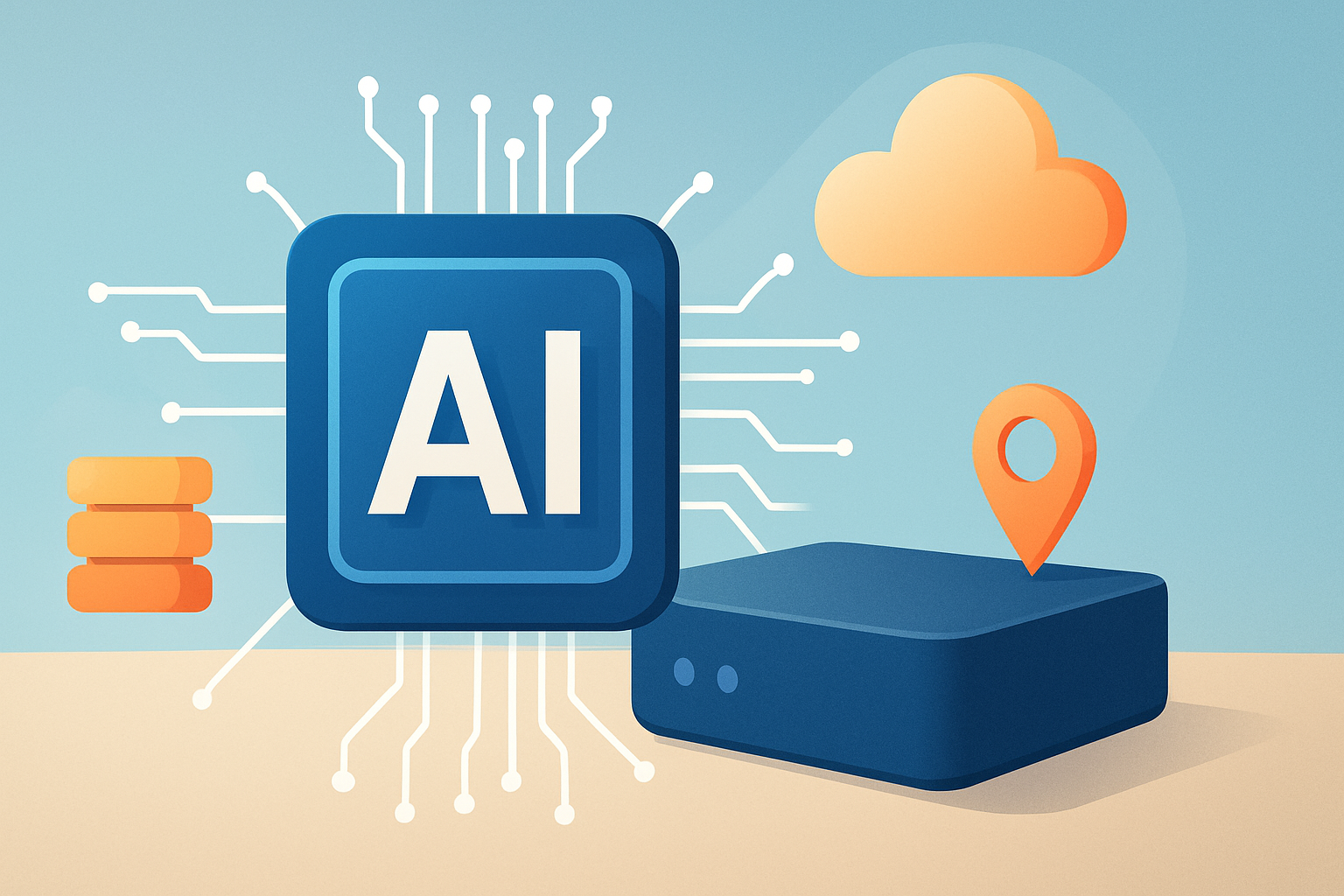
Edge computing is moving from “nice to have” to a core design principle for modern AI systems. Instead of sending every request to the cloud, edge devices process data locally. As a result, decisions happen faster and networks stay less congested. Meanwhile, privacy gains are becoming a major differentiator for regulated industries.
Right now, several AI trends are accelerating this shift. Specifically, advances in model compression, specialized hardware, and federated learning are making on-device intelligence practical. At the same time, new orchestration tools help developers manage fleets of edge nodes. Therefore, the edge AI ecosystem is maturing quickly.
Below are the top AI trends in edge computing that tech teams should watch. Additionally, each section highlights what is changing and why it matters for real deployments.
1. On-Device Inference With Smaller, Smarter Models
The biggest trend in edge AI is the move toward on-device inference. However, this is only possible when models fit within limited compute, memory, and battery budgets. Consequently, developers increasingly rely on smaller architectures and efficient inference techniques.
Model compression is now mainstream. Techniques such as quantization and pruning reduce model size without destroying performance. Meanwhile, knowledge distillation transfers capability from large models to compact student models. As a result, edge devices can run models that previously required cloud-grade hardware.
Another shift involves architecture choices. Lightweight networks, efficient attention variants, and mobile-first design are becoming common. Even better, runtimes tuned for edge devices help maintain speed and stability. Thus, real-time applications like video analytics and voice commands become feasible.
Common edge inference use cases include:
- Real-time object detection on cameras and drones
- Speech recognition on smartphones and kiosks
- Industrial anomaly detection in local monitoring systems
- Retail demand signals from store sensors
Furthermore, hybrid deployments are growing. In these systems, lightweight models run at the edge, while the cloud handles heavier training. Over time, the edge improves its local accuracy using periodic updates. This pattern balances cost, latency, and performance.
2. Privacy-Preserving AI at the Edge
Privacy is no longer a secondary concern. Instead, it is becoming a primary reason to process data locally. When sensitive information stays on the device or in a local site, risk decreases. Additionally, organizations reduce exposure to data breaches during transmission.
Edge computing supports privacy by design. For example, raw video or audio can be analyzed on-site, with only alerts or features leaving the device. Consequently, the cloud receives summarized outputs rather than full raw streams. This is particularly valuable in healthcare, transportation, and financial services.
Meanwhile, privacy-preserving machine learning techniques are gaining momentum. Federated learning is one of the most notable examples. In this approach, devices train locally and share updates instead of raw data. Then, an aggregator combines updates to improve a global model.
However, federated learning introduces new challenges. Teams must handle unreliable connectivity and uneven device participation. They also need safeguards against model leakage. Still, progress is steady, and tooling is improving.
Several practical privacy patterns are emerging:
- On-device feature extraction with secure transmission of embeddings
- Federated training for personalization without centralizing data
- Differential privacy techniques to reduce information exposure
- Local retention policies aligned with compliance needs
In addition, edge systems can reduce regulatory friction. When data handling is localized, audit trails and consent controls become clearer. Therefore, edge AI can support stricter governance requirements more effectively.
3. Hardware-Accelerated Edge AI and New Inference Pipelines
Edge AI performance is increasingly tied to hardware acceleration. Dedicated neural processing units, GPUs for embedded environments, and NPUs inside consumer devices are reshaping possibilities. As a result, developers can target more complex models while keeping latency low.
At the same time, inference pipelines are becoming more sophisticated. Many teams are adopting optimized runtimes and graph compilers. These tools translate models into device-friendly execution graphs. Consequently, performance improves and energy use decreases.
In practice, teams are also managing heterogeneous hardware. A deployment might include cameras with one chip type, gateways with another, and phones with a third. Therefore, orchestration matters. Developers need consistent model behavior across different compute environments.
Another important development is caching and streaming inference. Rather than processing complete inputs each time, systems reuse intermediate results. Additionally, video streams can be processed with temporal optimization. This reduces redundant compute and helps maintain real-time responsiveness.
Key hardware and pipeline trends include:
- Model execution on NPUs for lower power draw
- Runtime optimization using vendor-specific acceleration
- Streaming and incremental inference for time-series data
- Containerized edge services for consistent operations
Overall, these advances make edge AI more predictable. They also help teams hit service-level targets. As edge devices become more capable, more workloads shift from the cloud to local sites.
4. Edge Orchestration, Device Management, and AI Operations (AIOps)
Once models run on many devices, operations become the real differentiator. Edge AI is not just about accuracy. It is also about deployment reliability, version control, monitoring, and rollback strategies. Consequently, AI operations are expanding to the edge.
Device management platforms now play a central role. They coordinate updates, handle credentials, and manage connectivity. Additionally, they support safe rollouts for new model versions. If something fails, rollback can occur quickly without disrupting entire networks.
Monitoring is evolving as well. Teams track model drift, performance degradation, and latency changes. They also monitor hardware health and thermal constraints. This is where AIOps principles start to apply to edge environments.
Even better, feedback loops are being implemented. Edge systems can send metrics back to training pipelines. Then, models can be updated based on real-world data patterns. Therefore, continuous improvement becomes realistic.
If you are building an AI workflow, it helps to think beyond inference. For instance, you may also automate data labeling and preprocessing. In that context, you might find guidance in Step-by-Step Guide to AI Automation. It helps teams structure pipelines that connect edge outputs to training and iteration.
Ultimately, strong orchestration reduces operational risk. It also lowers total cost of ownership across large edge deployments.
5. Real-Time Edge Analytics for Industrial and Smart City Systems
Another major trend is the expansion of real-time analytics at the edge. Industrial sensors generate continuous streams of data. Sending all of it to the cloud is often impractical. Edge processing helps filter noise and surface meaningful events instantly.
For example, manufacturing lines can detect anomalies early. Instead of waiting for a daily report, systems trigger alerts in seconds. This reduces downtime and prevents product defects. Similarly, smart cities use edge intelligence to optimize traffic flows and manage public safety.
These systems typically combine multiple model types. Vision models may detect objects. Time-series models may forecast equipment health. Then, decision logic routes actions, such as changing camera focus or adjusting operational parameters.
Moreover, local decision-making supports resilience. When connectivity drops, edge nodes can continue operating. This matters in environments where uptime is critical. It also helps avoid “cloud dependency” in mission-critical use cases.
From a development standpoint, teams are increasingly adopting event-driven architectures. Edge agents convert sensor data into events, such as “anomaly detected” or “crowd density high.” Then, downstream services respond. This design keeps system complexity manageable as deployments scale.
As edge analytics mature, the focus shifts from experimentation to production. Benchmarks for latency, accuracy, and energy use become standard evaluation metrics. Thus, the edge AI trend is becoming more measurable and repeatable.
6. Better Data Strategies: Edge Feature Stores and Contextual Learning
Data strategy is often overlooked in edge AI conversations. Yet, it determines whether models can adapt and remain useful over time. Because edge devices operate in changing environments, their data distributions shift. This is a classic source of model drift.
To address this, teams use edge feature stores and contextual learning patterns. Instead of storing raw data indefinitely, systems store extracted features. Those features are smaller, more privacy-friendly, and easier to process. Then, models can update based on feature-level signals.
Some deployments also incorporate context-aware behavior. For instance, a system may adjust thresholds based on weather, time of day, or local traffic patterns. This reduces false positives and improves user trust. Over time, feedback from human operators can guide adjustments.
Additionally, edge systems can support retrieval from local indexes. When working offline, the model can still access relevant context. For example, a warehouse device can retrieve part documentation from local storage. Then, it can pair that context with AI predictions.
If your organization focuses on content or marketing workflows, edge AI can still matter. Edge inference can support local personalization and faster content tagging. However, cloud systems often remain important for analytics and reporting. To align AI with digital strategy, teams may also explore How to Use AI for Data Analysis for broader measurement frameworks.
Key Takeaways
- Edge AI is accelerating through smaller models and faster on-device inference.
- Privacy-preserving approaches like federated learning make local processing more viable.
- Hardware acceleration and optimized runtimes reduce latency and energy use.
- AI operations and orchestration are essential for reliable, large-scale edge deployments.
- Real-time edge analytics drives value in industrial settings and smart environments.
- Edge-focused data strategies help models adapt without centralizing sensitive data.
Artificial News will keep tracking how these AI trends in edge computing reshape technology stacks. If you are planning a deployment, start with your latency and privacy requirements. Then, match the model strategy and orchestration approach accordingly.