AI in Agriculture: Smart Farming Trends
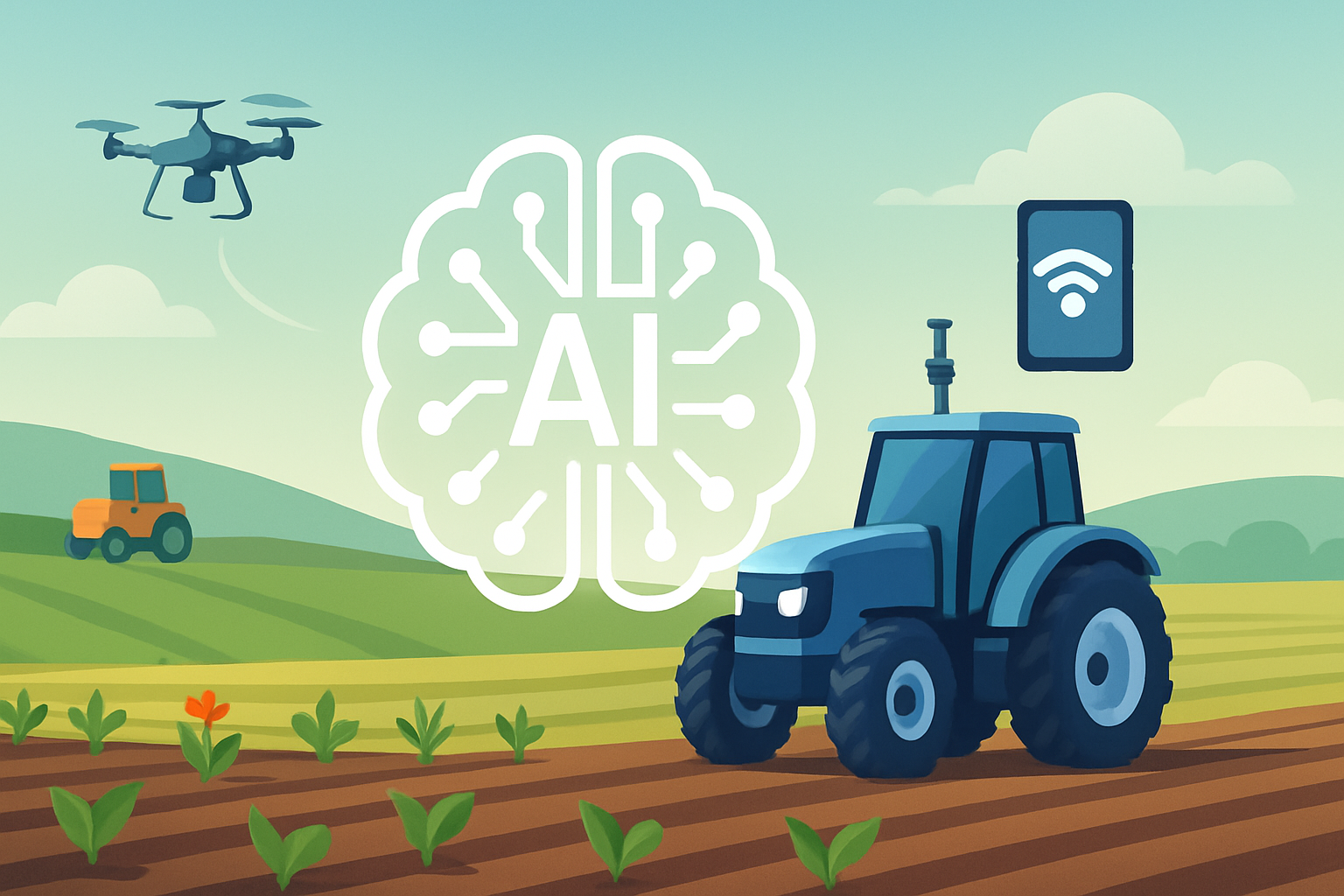
AI is rapidly reshaping agriculture through smarter decisions, automated operations, and improved resilience. Farmers now use computer vision, predictive models, and robotics to boost yields while cutting waste.
Quick Overview
- AI-enabled sensing improves crop monitoring and faster disease detection.
- Machine learning optimizes irrigation, fertilization, and spraying schedules.
- Robotics and autonomy support planting, weeding, and harvesting efficiency.
- Forecasting tools help farms manage weather risk and market volatility.
AI in Agriculture Is Moving From Experiments to Field Reality
For years, agriculture technology felt like a patchwork of sensors, machinery upgrades, and software pilots. However, AI is now turning raw data into actionable guidance. As a result, farms can respond faster and more precisely to changing conditions. Additionally, these tools are becoming easier to adopt, even for smaller operations.
Importantly, smart farming is not only about bigger yields. It also supports sustainability goals by reducing overuse of water, fertilizer, and pesticides. Meanwhile, AI can help farms adapt to extreme weather and shifting growing seasons. Therefore, AI’s value is both economic and environmental.
In this context, “AI in agriculture” includes several overlapping systems. These systems typically combine computer vision, forecasting, decision support, and robotics. Consequently, the sector is evolving into a more data-driven industry.
The Core Smart Farming Trends Powered by AI
AI adoption is accelerating across many parts of the farming lifecycle. From scouting fields to managing supply chains, intelligence is becoming embedded in daily operations. Below are the most impactful trends defining the current wave.
1) Computer Vision for Crop Health and Disease Detection
One major breakthrough comes from computer vision. Cameras on drones, tractors, or fixed towers can scan crop canopies at high resolution. Then, AI models identify stress patterns humans often miss early. As a result, farmers can act sooner and limit crop losses.
For example, algorithms can detect subtle leaf discoloration and growth anomalies. They can also estimate disease severity based on texture and color changes. Furthermore, this approach supports targeted treatment instead of blanket spraying.
2) Predictive Analytics for Yield Forecasting and Risk Management
Next, predictive analytics is improving how farms plan. AI models can forecast yields using historical records and real-time inputs. These inputs may include satellite imagery, soil data, and weather patterns. Consequently, better forecasts enable smarter decisions about planting dates and resource allocation.
In addition, risk forecasting is becoming critical. Models can estimate drought risk, pest outbreaks, or storm impacts. Then, farmers can adjust irrigation plans or protective measures. This is especially valuable as weather volatility increases globally.
3) Precision Irrigation and Fertilization
Water and fertilizer are major cost drivers in modern agriculture. AI helps reduce waste by using field-specific insights. For instance, machine learning can recommend irrigation amounts based on soil moisture and plant health signals. As a result, farms can maintain optimal conditions without overspending.
Similarly, AI can optimize fertilization schedules. It may recommend variable-rate application based on nutrient uptake signals. Therefore, the farm can avoid both under-fertilizing and nutrient runoff.
4) Autonomous Robotics for Weeding, Planting, and Harvesting
Robotics is another fast-growing area. AI-guided systems can navigate fields using sensors and machine vision. Then, they can perform tasks with high accuracy and repeatability. This matters because labor shortages are a persistent concern in agriculture.
Autonomous weeding is a particularly promising use case. Instead of broad herbicide spraying, robots can target weeds based on visual classification. Additionally, this reduces chemical use and can protect soil health.
5) Edge AI for Real-Time Decisions in the Field
Many farms operate with limited connectivity. Therefore, edge AI is gaining attention. Edge devices process data locally, enabling faster responses. As a result, systems can trigger alerts or actions immediately.
For example, a tractor-mounted unit can analyze imagery while moving. Then, it can adjust variable-rate spraying on the spot. Meanwhile, offline operation helps maintain reliability during network interruptions.
6) Integrated Data Platforms Across the Farm
AI performs best with clean, connected data. Hence, farms are building unified platforms to collect information from multiple sources. These sources include sensors, weather feeds, machinery logs, and satellite imagery. Then, AI systems can generate more accurate recommendations.
Additionally, integration improves traceability. It can support compliance needs and documentation for buyers. Therefore, AI is not only optimizing production but also strengthening farm transparency.
How AI Improves Farm Efficiency: From Data to Decisions
To understand why these trends matter, it helps to see the workflow end-to-end. AI typically moves through a repeatable loop: sensing, learning, decision-making, and action. Over time, that loop becomes more accurate as new data is collected.
How It Works / Steps
- Collect data from cameras, sensors, and satellite imagery.
- Preprocess signals to remove noise and standardize measurements.
- Apply machine learning models for detection, classification, or prediction.
- Generate recommendations for irrigation, fertilization, or treatment.
- Execute actions through variable-rate hardware or robotic systems.
- Track results to improve models and refine future recommendations.
Where the Biggest ROI Comes From
Not every AI project delivers value equally. Still, many farms find strong returns when AI reduces input costs and prevents losses. Additionally, AI can reduce labor burden by automating repetitive tasks.
Common ROI opportunities include:
- Lower water use through precision irrigation control.
- Reduced pesticide and herbicide costs via targeted applications.
- Faster disease identification to limit spread and yield damage.
- Improved harvest planning using yield prediction insights.
- Better equipment utilization through predictive maintenance.
Moreover, AI can support long-term resilience. For instance, forecasting helps farms prepare for drought or pest pressure. Therefore, AI investment can be seen as risk reduction.
Examples of AI in Action Across Crop and Livestock Systems
AI use cases vary by region, crop type, and operational scale. However, the underlying patterns are consistent: sense the environment, interpret it with models, and act quickly. Below are realistic examples of how smart farming trends show up today.
AI for Crop Monitoring in Row Crops
Drones or field cameras capture images across large areas. Then, AI models identify nutrient deficiencies or early disease signs. After that, variable-rate spraying applies treatment only where needed. As a result, farmers protect yields with fewer chemicals.
AI for Orchard and Vineyard Management
Orchards often benefit from canopy-level analysis. AI can estimate growth stage and flag stress conditions. Additionally, it can guide pruning and thinning schedules. These steps can improve fruit quality and reduce wasted labor.
AI for Greenhouses and Controlled Environments
In greenhouses, AI can optimize climate conditions. Models can tune ventilation, heating, and lighting based on plant responses. Furthermore, AI can help maintain stable growing conditions. This is especially useful for high-value crops.
AI for Livestock Health and Barn Operations
AI also applies to livestock monitoring. Cameras and wearable sensors can detect behavior changes. Then, AI can flag potential illness before it becomes severe. In addition, AI can help track feed intake and optimize rationing.
Challenges and Limitations Farmers Should Know
AI is promising, but it is not magic. Several challenges can limit performance or slow adoption. Addressing these issues early can improve outcomes.
- Data quality gaps: Models require consistent, labeled data to perform well.
- Workflow integration: Tools must fit farm operations, not disrupt them.
- Model drift: Conditions change across seasons and regions, impacting accuracy.
- Hardware constraints: Sensors and connectivity must withstand field conditions.
- Training and adoption: Teams need practical guidance to use insights effectively.
Nevertheless, progress is underway. Vendors are improving onboarding, providing pre-trained models, and offering better dashboards. Additionally, many systems now learn using ongoing field feedback.
What to Watch Next in Smart Farming
As AI tools mature, the next improvements may focus on autonomy, interoperability, and transparency. Farmers will likely demand systems that explain recommendations in understandable terms. They will also want better compatibility between platforms and machinery.
In addition, AI may extend beyond the farm gate. Supply chain analytics can help match production to demand more precisely. Meanwhile, sustainability reporting could become easier through automated evidence collection.
If you’re also interested in adjacent AI applications, consider exploring how to use AI for customer insights. Those same data-driven principles can influence farm-to-market strategies. You may also find value in how AI is shaping smart cities, since smart infrastructure trends often impact rural networks and logistics.
FAQs
Is AI in agriculture only for large farms?
No. While large farms may deploy more sensors, smaller farms can benefit from targeted tools. Many providers offer scalable options, including drone surveys and simple monitoring dashboards.
What data sources are most useful for AI farming systems?
Common sources include satellite imagery, drone photos, soil sensors, weather feeds, and equipment logs. The best results usually come from combining multiple data types.
Can AI replace agronomists or farmers?
AI is best viewed as an assistive layer. It can surface insights and reduce routine labor. However, agronomists and farmers provide context and on-the-ground judgment.
How do farmers verify AI recommendations?
Verification typically involves field trials and comparison against previous seasons. Many systems include confidence scores and highlight areas needing closer inspection.
What is edge AI, and why does it matter in agriculture?
Edge AI processes data locally on devices near the field. This reduces latency and works even with limited internet connectivity. As a result, decisions can happen in real time.
Key Takeaways
- AI-driven smart farming uses sensing, modeling, and automation to improve decisions.
- Computer vision and predictive analytics are leading adoption areas.
- Precision irrigation and targeted treatment reduce waste and input costs.
- Robotics and edge AI can overcome labor shortages and connectivity limits.
Conclusion
AI in agriculture is transitioning from promising pilot projects to practical field tools. Smart farming trends show clear momentum in crop monitoring, risk forecasting, and precision resource use. Moreover, robotics and edge AI are pushing these systems toward faster, more independent operation.
Ultimately, the most successful implementations will be those that fit real farm workflows. They must deliver measurable value without adding complexity. As AI models improve and data platforms become more integrated, agriculture will keep moving toward smarter, more resilient production.