AI Trends in Blockchain Technology: From Trust to Autonomous Networks
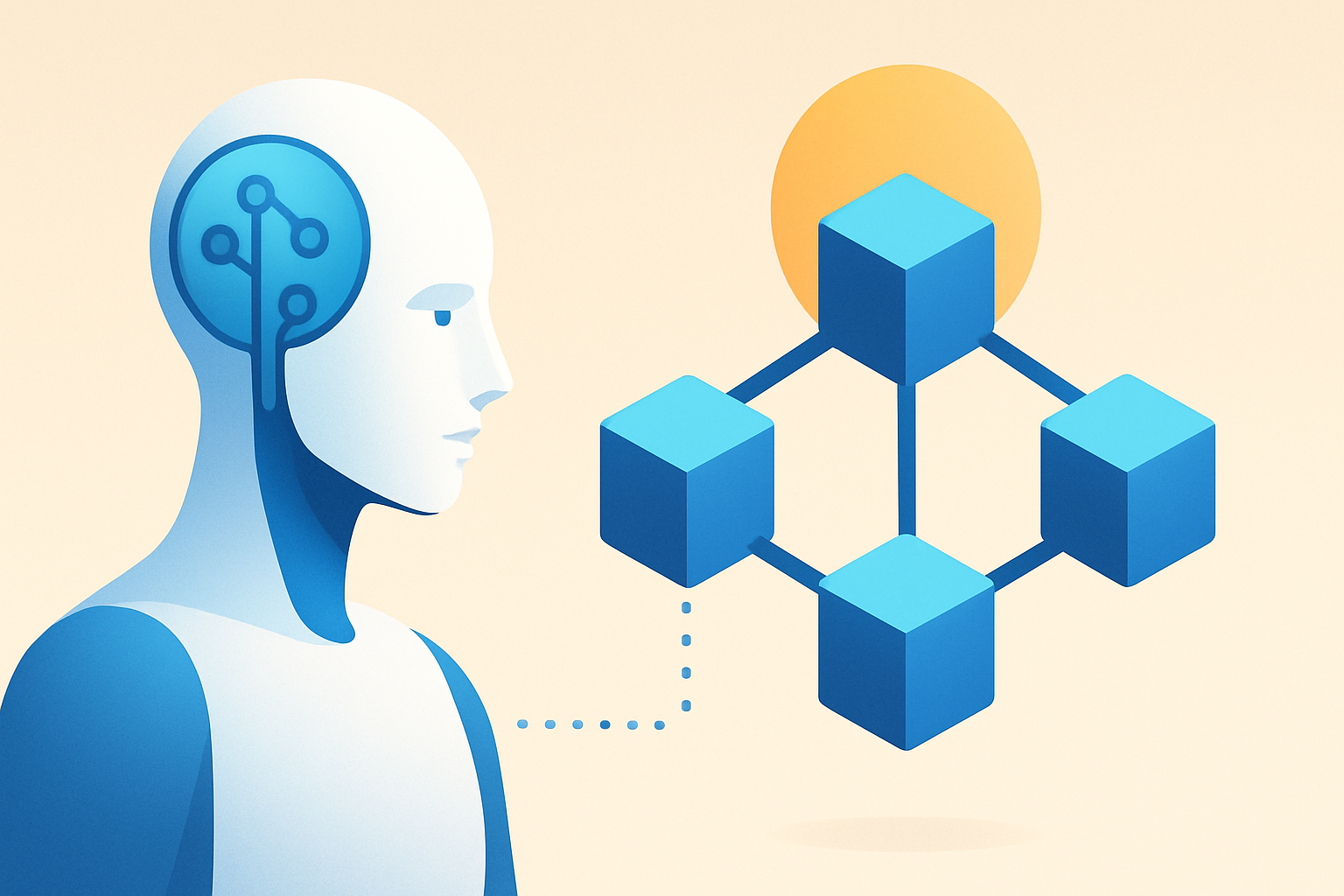
AI and blockchain have moved from separate hype cycles to genuine technical convergence. Now, new AI trends in blockchain technology are reshaping how systems verify data, enforce rules, and respond to events. Instead of relying only on static code, modern networks increasingly use learning systems to detect fraud, optimize performance, and improve decision-making.
This shift matters for startups, enterprises, and regulators alike. Because blockchains are built for trust, adding AI changes what “trust” means. Meanwhile, AI benefits from blockchain’s auditability and tamper resistance. As these strengths combine, the result is a new class of autonomous, data-driven infrastructures.
In this article, we break down the most important AI trends in blockchain technology. We also discuss real-world use cases, risks, and practical next steps for teams building in this space.
Why AI and Blockchain Are Converging Now
Blockchain networks are excellent at recording facts and preserving historical records. However, they struggle with flexible interpretation of data. Code executes deterministically, but real-world information is messy and often incomplete. That is where AI enters the picture.
AI can classify, predict, and extract meaning from unstructured or noisy signals. It can also adapt based on observed outcomes. Therefore, AI enables blockchain systems to move beyond “if this happens, then that” logic. Over time, they can evolve toward “under these conditions, we adjust our behavior.”
At the same time, blockchain helps AI systems by providing integrity guarantees. It can store provenance, model updates, and audit trails. Consequently, teams can better demonstrate who contributed data, what changed, and when.
Trend 1: AI-Driven Smart Contracts That React to Reality
Traditional smart contracts are rule-based. They trigger actions when specific conditions are met. Yet many meaningful conditions are probabilistic, such as whether an event is likely fraudulent or whether a delivery likely met quality standards.
AI-enhanced smart contracts aim to bridge that gap. In many architectures, AI models generate signals that smart contracts can verify and act on. This approach retains the transparency of blockchain while allowing probabilistic reasoning from AI.
However, developers must handle a key challenge: smart contracts cannot “directly” run heavy AI computations on-chain. Instead, they typically use off-chain inference or specialized execution environments.
Common patterns include:
- Off-chain AI inference with on-chain verification: The AI generates outputs, then cryptographic proofs or signatures help confirm integrity.
- Event-based model triggers: Contracts call AI systems when specific on-chain events occur.
- Reputation-weighted execution: Contracts consider a participant’s historical performance when deciding how to proceed.
- Adaptive parameters: Rather than changing business logic, AI tunes risk thresholds or fee schedules.
As a result, blockchain becomes more responsive to real-world signals. Meanwhile, AI systems gain a tamper-evident foundation for their decisions.
Trend 2: Decentralized Identity and AI-Assisted Trust Scoring
Identity is one of blockchain’s hardest problems in practice. Anyone can create an address, but linking identities to real-world behavior is complex. AI can help by analyzing patterns across transactions, credentials, and interaction histories.
In parallel, decentralized identity systems can store verifiable claims and authentication events. Therefore, an AI model can use reliable, auditable data rather than unverifiable claims.
Trust scoring is emerging as a practical use case. Instead of treating every participant equally, platforms assign risk or reputation signals. Those signals then affect permissions, limits, and contract outcomes.
Potential applications include:
- Fraud and anomaly detection: Models flag suspicious transaction patterns or behavioral shifts.
- KYC signal enrichment: AI can organize and interpret evidence, while identity proofs remain verifiable on-chain.
- Sybil resistance: Trust scores can help reduce the impact of fake networks.
- Reputation-based access: Higher trust can enable faster settlement or lower fees.
Still, teams must be careful. AI-driven trust scoring can introduce bias if the training data is uneven. Consequently, governance and explainability become essential.
If you are exploring automation and identity workflows, you may also like related topic.
Trend 3: Token Intelligence and Real-Time Market Intelligence
Cryptocurrency markets generate massive streams of structured and unstructured data. On-chain data, order flows, social signals, and news narratives all influence price discovery. AI is increasingly used to interpret these signals faster than humans can.
Token intelligence platforms aim to transform raw blockchain data into actionable insights. They can estimate liquidity shifts, detect manipulation, and forecast volatility. Additionally, they may translate complex metrics into understandable risk views for users.
However, the most valuable systems do more than predict prices. They also support better decisions. For instance, AI can help liquidity providers choose strategies, while smart contracts enforce risk limits.
Key components often include:
- On-chain analytics: Address clustering, flow tracking, and contract interaction patterns.
- Graph-based machine learning: Models that understand relationships across entities.
- Multimodal data fusion: Combining text, images, and numeric data into a single signal.
- Explainability layers: Highlighting which signals drove a decision.
As a result, “token intelligence” becomes less about hype and more about operational support. Yet, teams must manage the risk of overfitting and misleading indicators.
Trend 4: Privacy-Preserving AI with Secure Computation
Privacy remains a major constraint for many AI applications. Blockchain is transparent by design, which can conflict with sensitive data requirements. Consequently, researchers and engineers are experimenting with cryptography and secure computation.
Emerging approaches include zero-knowledge proofs and confidential computing. These methods can allow AI-related steps while keeping raw inputs private. For example, a system can prove that an inference was computed correctly without revealing the data itself.
In practice, this trend often targets:
- Private identity verification: Proving eligibility without exposing personal attributes.
- Confidential model updates: Sharing improvements without exposing training data.
- Secure governance workflows: Letting participants vote without leaking strategy details.
Thus, blockchain transparency can coexist with privacy goals. Still, implementation complexity and performance overhead remain significant barriers.
Trend 5: On-Chain Data Provenance for Training and Auditing
AI quality depends heavily on training data. Yet data provenance is often unclear in real deployments. Blockchain can record data origin, transformations, and usage rights. This capability strengthens auditability for AI-driven products.
One promising direction is “data marketplaces” for AI. In these systems, data providers can attach terms and verify contributions. Meanwhile, consumers can track which datasets were used. Additionally, model developers can validate that datasets comply with licensing requirements.
Provenance also supports accountability after deployment. If an AI system produces an incorrect decision, teams can trace the underlying data lineage. That traceability can accelerate incident response and compliance reporting.
For many organizations, this is a practical advantage. It turns AI governance from an afterthought into a built-in capability.
Trend 6: Decentralized AI Networks and Agentic Coordination
As foundation models grow, there is growing interest in decentralized AI networks. These networks aim to distribute model access, compute, and inference routing across multiple parties.
Blockchain can coordinate resources. Smart contracts can allocate tasks, enforce payments, and record execution logs. AI agents can then execute workflows across the network, responding to triggers and outcomes.
That said, agentic coordination is complex. The system must manage costs, ensure safe behavior, and prevent abuse. Therefore, successful deployments often include strict policy layers, reputational controls, and monitoring.
Useful coordination features include:
- Task routing: Sending inference jobs to the best available compute provider.
- Proof of execution: Confirming that work was done correctly.
- Payment settlement: Automating rewards and penalties based on outcomes.
- Policy enforcement: Ensuring agents follow safety constraints.
Overall, this trend pushes blockchain from passive ledger to active orchestration layer.
Security and Governance: The Risks Behind the Hype
AI in blockchain is not automatically safer than traditional designs. New risks appear when models influence contract execution and governance outcomes. Therefore, security needs to evolve alongside capability.
Common risks include model manipulation, adversarial inputs, and data poisoning. Attackers may also try to exploit weaknesses in the pipeline between on-chain triggers and off-chain inference. Additionally, if model outputs are not verifiable, smart contracts can be forced into incorrect actions.
Teams should treat governance as a first-class component. That means:
- Model and data versioning: Store hashes and metadata for traceability.
- Verification mechanisms: Use proofs, signatures, or audited inference services.
- Rate limits and circuit breakers: Prevent rapid cascading failures.
- Transparent monitoring: Track drift, anomalies, and error rates.
- Human review pathways: Keep high-impact actions gated initially.
At the same time, regulators will scrutinize identity, transparency, and liability. Organizations should prepare documentation early to avoid delays later.
What This Means for Businesses Building in 2026
AI trends in blockchain technology will reward teams that focus on measurable outcomes. Rather than chasing “AI everywhere,” successful projects define clear decision points. They then connect AI inference to blockchain guarantees in a controlled way.
Here are practical steps for builders:
- Start with narrow workflows: Use AI to classify or score events, not to rewrite core business logic immediately.
- Design for auditability: Record input hashes, output signatures, and model versions.
- Choose a verification strategy: Decide how outputs will be trusted and validated.
- Plan for fallback behavior: Define what happens if the model fails or confidence is low.
- Invest in governance: Establish how updates are approved and how disputes are resolved.
In addition, teams should consider user experience. Users may not care about model architecture. They do care about speed, reliability, and fairness.
If you want broader context on AI ecosystems, see Top AI Trends in Cloud Computing. For organizations with distributed teams, AI Tools for Remote Work Efficiency also offers useful operational perspective.
Key Takeaways
- AI trends in blockchain technology focus on making smart contracts more adaptive and context-aware.
- Decentralized identity and trust scoring combine verifiable claims with AI-driven anomaly detection.
- Token intelligence uses AI to interpret on-chain signals and support better risk decisions.
- Privacy-preserving methods and data provenance improve compliance, security, and auditability.
Conclusion
AI and blockchain are converging into a more powerful systems layer. Instead of treating AI as a black box and blockchain as a static ledger, innovators are connecting them thoughtfully. The most promising developments enable verification, auditability, and responsive decision-making.
At the same time, the path forward requires careful governance and security engineering. Model outputs must be verifiable, identity signals must be fair, and privacy must be preserved where needed. Businesses that prioritize measurable value and robust oversight will be best positioned to benefit from the next phase of AI-driven blockchain technology.