AI vs Human Creativity: Who Wins?
Debates about AI vs human creativity have moved from academic journals into daily headlines. As generative models create music, images, and text, people ask who really wins. This article examines strengths, weaknesses, and real-world outcomes. It also explores how AI changes creative work and what that means for individuals and industries.
What is AI vs Human Creativity?
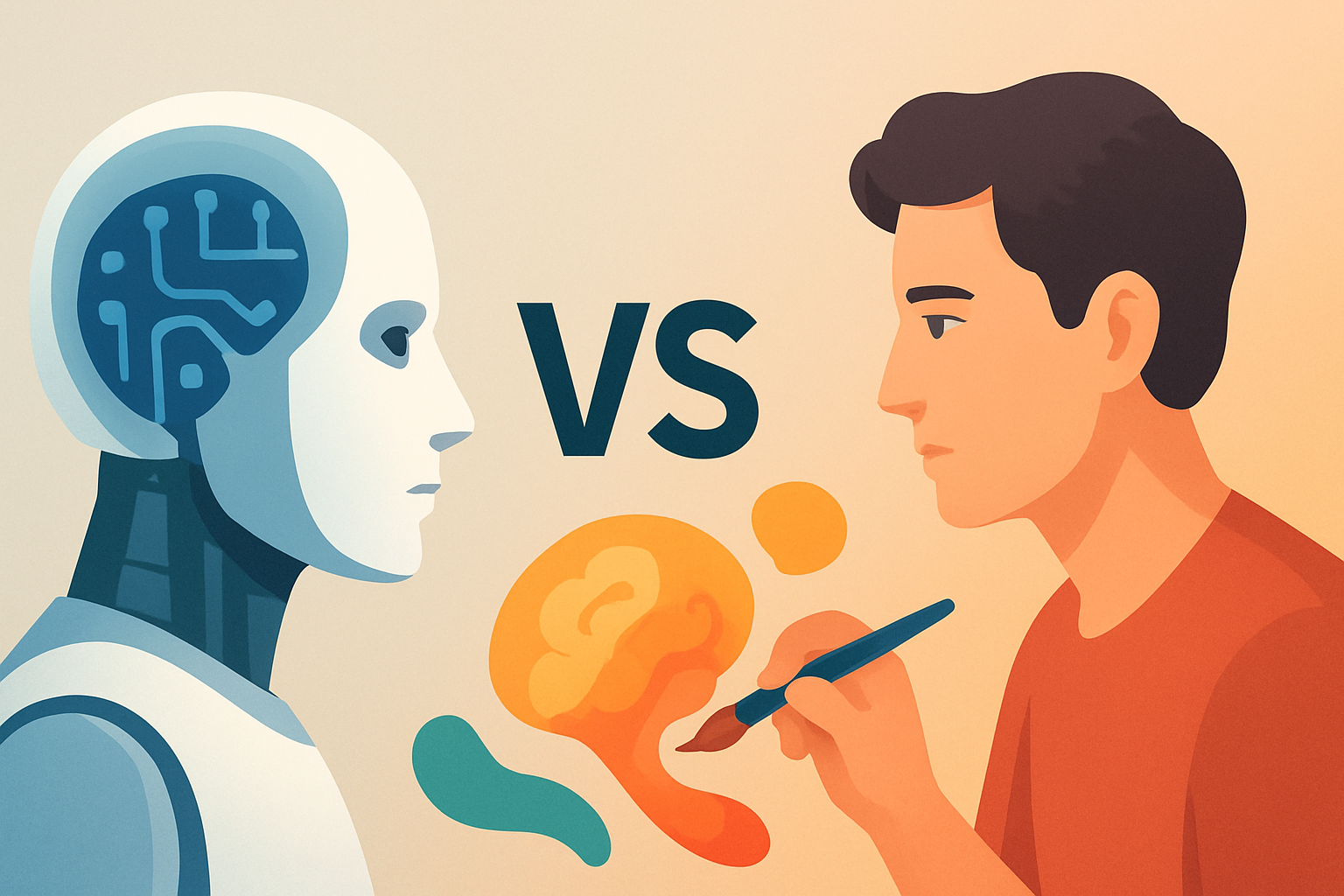
AI vs human creativity frames a comparison between algorithmic generation and human imagination. On one side are machine learning models trained on vast datasets. On the other side are humans drawing on experience, context, and intuition.
Human creativity typically involves novel problem solving, emotional depth, and cultural awareness. AI creativity emerges through pattern recognition, recombination, and probabilistic sampling. Both manifest in art, writing, design, and product innovation.
How does AI vs Human Creativity work?
Understanding how each creates helps explain differences in output quality and novelty. AI systems use neural networks to analyze large datasets. They learn statistical relationships and replicate styles or patterns accordingly.
For example, large language models predict the next word based on context. Generative image models synthesize visuals by learning pixel-level structures. These systems excel at producing polished variants quickly and at scale.
Humans, however, fuse lived experience, ethics, and empathy into creative acts. People set intentions, interpret ambiguity, and apply judgment. They also bring cross-domain insights that models struggle to encode.
Why is AI vs Human Creativity important?
This comparison matters because creativity drives culture and commerce. Creative output shapes advertising, entertainment, education, and innovation. Therefore, shifts in creative tools affect jobs and markets.
AI accelerates idea generation and lowers production costs. It democratizes access to creative capabilities. At the same time, it raises questions about authenticity, authorship, and value.
Policymakers and businesses watch these trends closely. The outcome will influence intellectual property, labor markets, and how society defines artistic merit. Moreover, trends in ideas and technology shape broader cultural shifts.
Is AI vs Human Creativity better than Y?
This section answers a common follow-up: is AI creativity better than human creativity? The real answer is, it depends. Context, goals, and criteria determine the winner.
For repetitive or high-volume creative tasks, AI often outperforms humans. It can produce many variations quickly. This capability benefits marketing campaigns, rapid prototyping, and A/B testing.
In contrast, humans still lead in originality and emotional resonance. Works grounded in lived experience or subtle social critique generally require human insight. Moreover, humans handle ethical ambiguity more reliably.
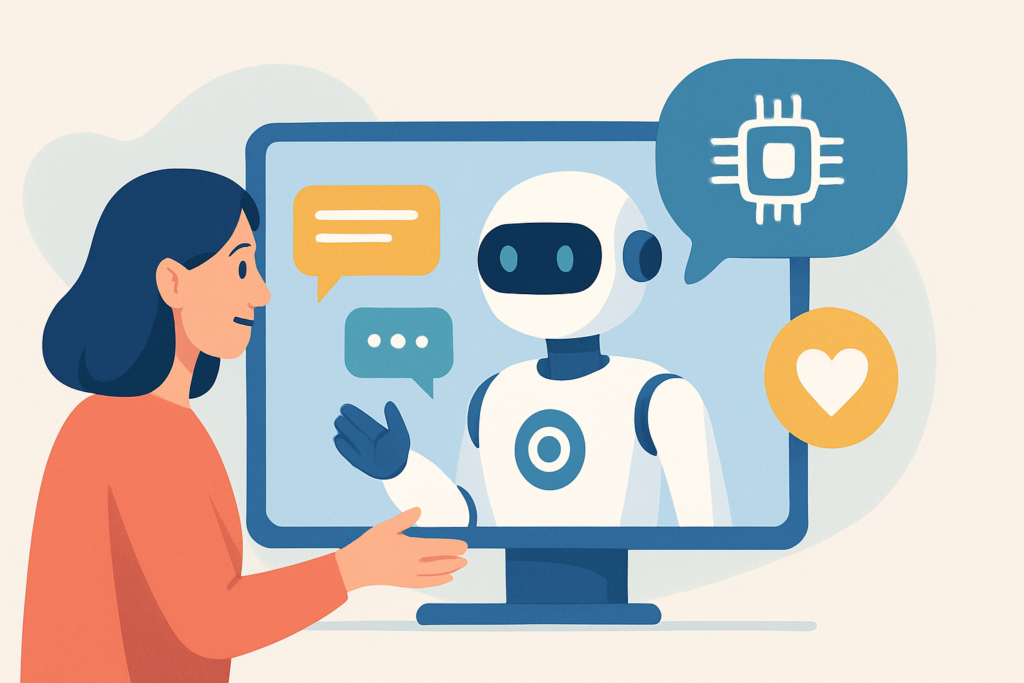
Hybrid approaches often deliver the best results. For example, a human might use AI to draft multiple concepts. They then refine and inject meaning to achieve a final piece. This collaboration leverages speed and depth together.
Can beginners use AI vs Human Creativity?
Beginners can absolutely use AI tools to boost creativity. Many platforms offer intuitive interfaces for non-technical users. These make idea exploration accessible to anyone.
New creators should follow a few practical steps. Start by defining a clear goal for the creative task. Use AI to generate variations and then apply human judgment to select and refine.
For practical guidance, beginners can consult hands-on resources. For example, a Beginner’s Guide to Using AI for Content Creation explains workflows and best practices. Meanwhile, a list of creative prompts can inspire daily experiments.
Also, consider learning which tools match your needs. Reviews and comparisons help. For blogging, see Best AI Writing Tools Compared for Bloggers. For broader creative ideas, check 10 Creative Ways to Use AI in Everyday Life.
Where AI excels: practical creative strengths
AI's strengths are clear in several areas. First, speed: models generate multiple drafts in minutes. Second, scalability: machines can handle vast volumes of content. Third, consistency: AI can maintain brand voice across outputs.
Moreover, AI can surface unexpected combinations. It mines large datasets to propose novel pairings. This capability supports brainstorming and helps overcome creative blocks. For teams, AI becomes a collaborative sparring partner.
Where humans excel: irreplaceable creative qualities
Humans bring contextual judgment and cultural nuance to creative work. They understand irony, metaphor, and historical significance. These layers of meaning often escape purely statistical models.
Furthermore, humans take ethical responsibility for their creations. They can decide when to prioritize truth over persuasion. This stewardship matters in journalism, education, and public messaging.
Human artists also innovate through constraints and accidents. These emergent properties of human practice often yield breakthroughs. Machines can assist, but they rarely originate such leaps alone.
Ethics, authorship, and the business of creative work
As AI tools proliferate, ethical questions grow. Who owns a piece created with AI assistance? How should credit be assigned? These issues affect contracts and compensation models.
Copyright law is evolving to address AI-generated content. Courts and regulators are still defining boundaries. Meanwhile, businesses must adopt transparent policies for disclosure and attribution.
Workforce impacts are also significant. Some roles will shift rather than vanish. Creatives who adopt AI as a tool often increase their productivity and relevance. Others may need reskilling to stay competitive.
Case studies: AI and human collaboration in practice
Consider advertising agencies using AI to produce dozens of ad variants. Creative directors then apply strategic judgment to choose the best. This workflow increases testing and improves campaign performance.
In music, producers use AI to generate motifs. Musicians refine and humanize those motifs. The result blends technical novelty with emotional connection.
In healthcare communication, AI can draft patient education materials. Medical writers ensure accuracy and tone. This partnership speeds production while safeguarding quality.
Practical tips for balancing AI and human creativity
- Define clear roles: let AI handle volume and iteration, and humans handle judgment.
- Use AI for divergent thinking, then apply human convergence to refine ideas.
- Keep a human-in-the-loop for ethical oversight and fact checking.
- Document provenance and give proper attribution when appropriate.
- Invest in training so teams can effectively use AI tools.
Future outlook: trends in AI and creative ideas
Looking ahead, AI will keep improving at mimicking creative forms. Models will become better at long-form coherence and stylistic nuance. This progress will expand AI's usefulness in creative industries.
However, the value of human creativity will remain significant. Cultural context, lived experience, and ethical reasoning do not scale the same way as computation. Instead, they will become more prized.
Finally, collaborative ecosystems will define success. Teams that blend AI capabilities with human insight will set new standards. This hybrid model will shape the next wave of creative trends and business models.
Key Takeaways
AI vs human creativity is not a zero-sum contest. Each brings distinct strengths and limits. AI scales, accelerates, and suggests novel combinations. Humans bring judgment, meaning, and moral responsibility.
The most productive path combines both. Beginners can adopt AI tools to experiment and iterate. Professionals should learn to integrate AI into workflows without sacrificing depth and ethics.
Ultimately, the winners will be those who adapt. Organizations and creators who balance speed with human insight will lead the next creative wave. As ideas evolve, this balance will shape culture and commerce alike.