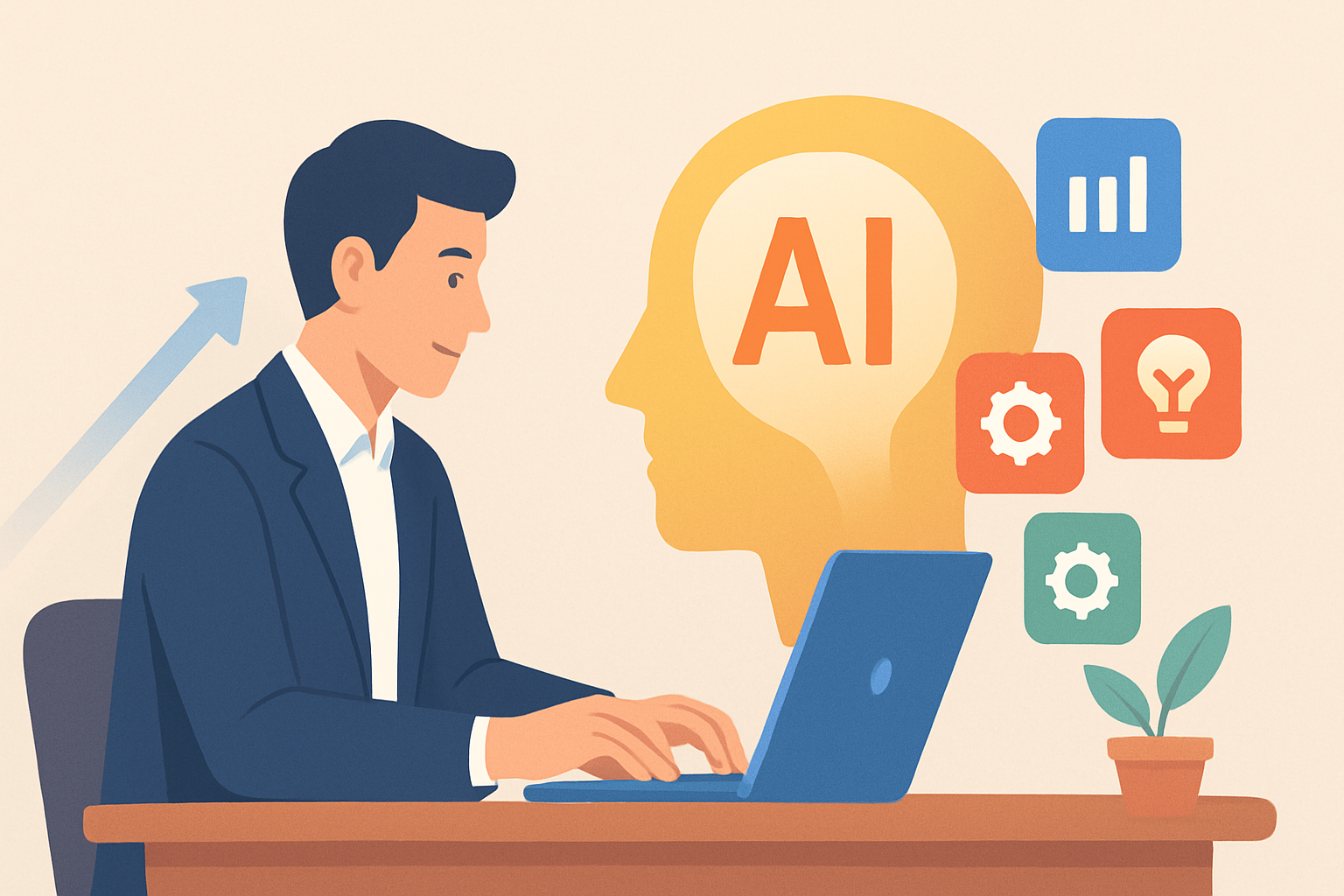
Top AI Tools for Small Business Growth
Small businesses face constant pressure to grow faster while spending less. Artificial intelligence now offers practical ways to win customers, automate routine tasks, and scale operations. This guide highlights the top AI tools that deliver measurable growth for small companies. Read on to learn where to start and how to choose the right tools for your needs.
1. Method One
Method One focuses on marketing and customer acquisition. These tools help find leads, increase conversions, and optimize ad spend with less manual work. For many small businesses, adopting a few targeted AI tools quickly raises campaign performance and lowers customer acquisition cost.
Key categories to consider include AI-driven advertising, email optimization, and personalized customer outreach. Use these tools to test creative, segment audiences, and automate follow-up sequences. Pair AI marketing tools with analytics to track ROI and scale what works.
- AdCreative.ai — Generates ad creatives and predicts performance at scale.
- Mailchimp (AI features) — Automates subject lines, send times, and audience splits.
- HubSpot CRM with AI — Scores leads and suggests actions for reps.
- Hootsuite/Buffer with AI — Optimizes social post timing and content suggestions.
For content-heavy campaigns, integrate AI writing tools to speed production. If you are new to content creation, the Beginner’s Guide to Using AI for Content Creation explains step-by-step adoption. Also consider a comparison of writing tools before committing, as covered in Best AI Writing Tools Compared for Bloggers.
2. Method Two
Method Two targets operations and automation. AI can automate bookkeeping, customer support routing, and routine workflows. Small teams see the biggest gains here because automation frees staff to focus on higher-value work.
Start with workflow automation and incremental pilots. Connect systems with low-code tools and use AI only where it reduces repetitive tasks. Prioritize tools that include clear audit logs, privacy safeguards, and easy integrations.
- Zapier / Make — Automates data flows between apps without code.
- QuickBooks + AI add-ons — Automate expense categorization and forecasting.
- Gusto — Streamlines payroll and HR with predictive insights.
- Otter.ai — Transcribes meetings and populates CRM notes automatically.
- Scribe — Creates step-by-step documentation from screen actions.
Reducing costs is a frequent driver for operational AI adoption. Learn how companies are cutting expenses with AI in our coverage at How Businesses Are Using AI to Cut Costs in 2026. Implement small pilots first and measure time saved and error reduction before scaling.
3. Method Three
Method Three emphasizes content, sales enablement, and customer service. These are areas where AI delivers quick visibility and measurable revenue improvements. Sales teams use AI to personalize outreach and shorten sales cycles.
Deploy conversational AI for support and use AI writing to produce landing pages, proposals, and product descriptions. Visual AI tools help with marketing assets and product photography. Together, these technologies streamline the buyer journey and improve conversion rates.
- Intercom / Drift — Conversational AI for lead qualification and support.
- ChatGPT / Claude — Drafts emails, proposals, and customer messages fast.
- Copy.ai / Jasper — Produces marketing copy at scale with brand tone controls.
- Canva (Magic Write) / Midjourney — Creates visuals for ads and product pages.
- Crystal or Gong — Analyzes sales calls and suggests coaching points.
Free tools can be useful for experimentation before you buy. Try a selection from our roundup of free options at Top Free AI Tools You Should Try Today. Monitor conversion lift and lead quality as you test new workflows.
How to Choose AI Tools for Sustainable Business Growth
Choosing the right tools requires a pragmatic approach. Prioritize measurable outcomes, integration ease, and data governance. Ask vendors about data usage, retention, and model updates before signing contracts.
Follow a simple evaluation process to reduce risk. First, define the business outcome you want. Second, run a bounded pilot. Third, measure impact, and then scale successful pilots. This reduces waste and provides clear ROI evidence to stakeholders.
- Define a single KPI for each pilot, like conversion rate or time saved.
- Limit pilots to 30–90 days for clear assessment.
- Ensure tools integrate with your CRM and analytics stack.
- Budget for training and change management, not just software costs.
Implementation Best Practices and Privacy Considerations
Successful implementation is more than installing software. It includes staff training, process redesign, and monitoring. Start small, involve frontline workers, and collect feedback continuously.
Data privacy and compliance matter for customer trust. Choose tools that support encryption and data residency where required. Maintain a simple data inventory to track what each AI tool accesses.
- Use role-based access to limit exposure to sensitive data.
- Migrate data incrementally and validate outputs before production use.
- Document decisions and monitor for bias or unexpected behavior.
Cost, ROI, and Vendor Selection
Many AI tools offer tiered pricing for small businesses. Start with lower-tier plans for pilots. Then upgrade based on measured benefits and adoption.
Calculate ROI using saved labor hours, increased revenue, or reduced errors. Include training costs and any needed integration work. Choose vendors with strong support and a transparent roadmap.
- Estimate time saved per week and multiply by fully loaded labor cost.
- Track incremental revenue from better leads or faster response times.
- Negotiate pilot-friendly terms and flexible contracts.
Key Takeaways
- AI tools can accelerate small business growth in marketing, operations, and sales.
- Start with a focused pilot and measure a single KPI for success.
- Prioritize integration, data governance, and staff training.
- Use free tools to experiment, then scale with paid solutions once validated.
- Keep an eye on emerging trends to stay competitive and adapt quickly.
AI adoption is now a practical growth strategy for small businesses. Focus on outcomes, pilot responsibly, and measure results. For a wider view of where AI is heading, see our analysis of The Biggest AI Trends Shaping 2026. With the right tools and approach, small teams can compete more effectively and grow with confidence.