AI in Healthcare: What You Need to Know Now
AI is transforming healthcare across diagnostics, operations, and patient care. This article explains current use cases, risks, and practical steps for adoption.
Quick Overview
- AI boosts diagnostic speed and accuracy across specialties.
- Operational AI reduces costs and streamlines workflows.
- Patient-facing tools improve access and engagement.
- Ethics, data quality, and regulation remain central concerns.
Why AI Matters in Healthcare Today
AI is no longer a distant promise in medicine. Real-world deployments now support radiology, pathology, and triage.
Machine learning models process images, signals, and records faster than manual review. Consequently, clinicians gain timely insights and can focus on complex decisions.
At the same time, hospitals and clinics use AI to cut administrative burdens. Automated scheduling, claims processing, and demand forecasting free staff for patient care.
Key drivers of adoption
Data growth, improved compute power, and algorithm maturity drive investment. Policy incentives and value-based care models also accelerate interest.
Nevertheless, adoption varies widely. Large health systems and specialty clinics lead, while smaller practices often lag due to cost and expertise gaps.
Where AI Is Being Used Now
Practical AI applications fall into clinical and non-clinical categories. Both offer measurable benefits and present distinct challenges.
Clinical decision support and diagnostics
AI models assist in interpreting imaging like X-rays, CTs, and MRIs. They flag anomalies and quantify disease markers.
For instance, algorithms detect lung nodules and signs of stroke faster than some manual workflows. They do not replace clinicians. Instead, they augment decision-making and reduce oversight errors.
Personalized treatment and drug discovery
Machine learning accelerates target identification and candidate screening. It helps tailor treatment plans by predicting likely responses.
Precision oncology tools suggest therapies based on genetic profiles. These systems combine clinical data and biomedical literature for actionable recommendations.
Remote monitoring and patient engagement
Wearables and smartphone apps collect longitudinal health data. AI analyzes patterns to detect deterioration early.
Chatbots and virtual assistants handle triage and follow-up tasks. They improve access while directing urgent cases to clinicians.
Operational efficiency and cost reduction
AI optimizes staffing, supply chains, and billing. Automated coding systems reduce administrative errors and delays.
Health systems that adopt AI see faster throughput and lower overhead. For more on organizational savings, see our analysis of broader cost strategies in healthcare and business: How Businesses Are Using AI to Cut Costs in 2026.
Benefits and Measurable Outcomes
Institutions report shorter diagnostic times, fewer repeat tests, and improved patient satisfaction. These gains translate to cost savings and better outcomes.
Furthermore, AI can reduce clinician burnout by automating repetitive tasks. However, measurable benefits depend on integration quality and data fidelity.
Risks, Bias, and Regulatory Landscape
Despite benefits, risks loom. Models trained on biased or incomplete data can worsen disparities.
Regulators now require clinical validation and post-market surveillance. The FDA and similar bodies have updated frameworks for AI-enabled medical devices.
Data privacy and security also matter. Health organizations must balance data utility and patient confidentiality under HIPAA and other laws.
Ethical considerations
Transparency about model performance is essential. Clinicians and patients need clear explanations of AI recommendations.
Accountability must remain human. Institutions should adopt governance structures for monitoring AI decision-making and outcomes.
How It Works / Steps
- Identify a clear clinical or operational problem to solve.
- Assess available data quality and completeness.
- Choose models and tools, including open-source or commercial options.
- Run pilot studies with clinician oversight and predefined metrics.
- Validate results externally and obtain regulatory clearances if needed.
- Integrate the solution into workflows and provide staff training.
- Monitor performance continuously and update models as needed.
Technology Stack and Tools to Consider
AI solutions require several layers. These include data pipelines, model training platforms, inference services, and user interfaces.
Many teams prototype with accessible tools and libraries. For readers exploring practical tools, our roundup highlights options and costs: Top Free AI Tools You Should Try Today.
Also, integration with electronic health records and cloud platforms is critical for production deployments.
Examples
Here are concrete use cases that show how AI affects care delivery and operations.
-
Radiology: AI flags suspicious lesions on imaging. Radiologists use these flags to prioritize reviews and reduce missed findings.
-
Pathology: Digital slide analysis quantifies tumor markers. Pathologists receive structured reports to inform diagnosis.
-
Emergency triage: Triage chatbots route low-risk callers to self-care resources. High-risk cases prompt immediate clinical review.
-
Revenue cycle: Automated coding and claims scrubbing cut denials and speed reimbursements.
-
Clinical trials: AI identifies eligible patients faster by screening records and genomics data.
Implementation Challenges and How to Overcome Them
Common obstacles include data silos, poor data labeling, and clinician resistance. Addressing these requires cross-functional leadership.
Start small, prove value, and scale incrementally. Establish data governance and clear KPIs early in the process.
Collaborations with academic centers and vendors can provide expertise and validation support. For broader trends in AI adoption, see our coverage: The Biggest AI Trends Shaping 2026.
FAQs
Will AI replace doctors?
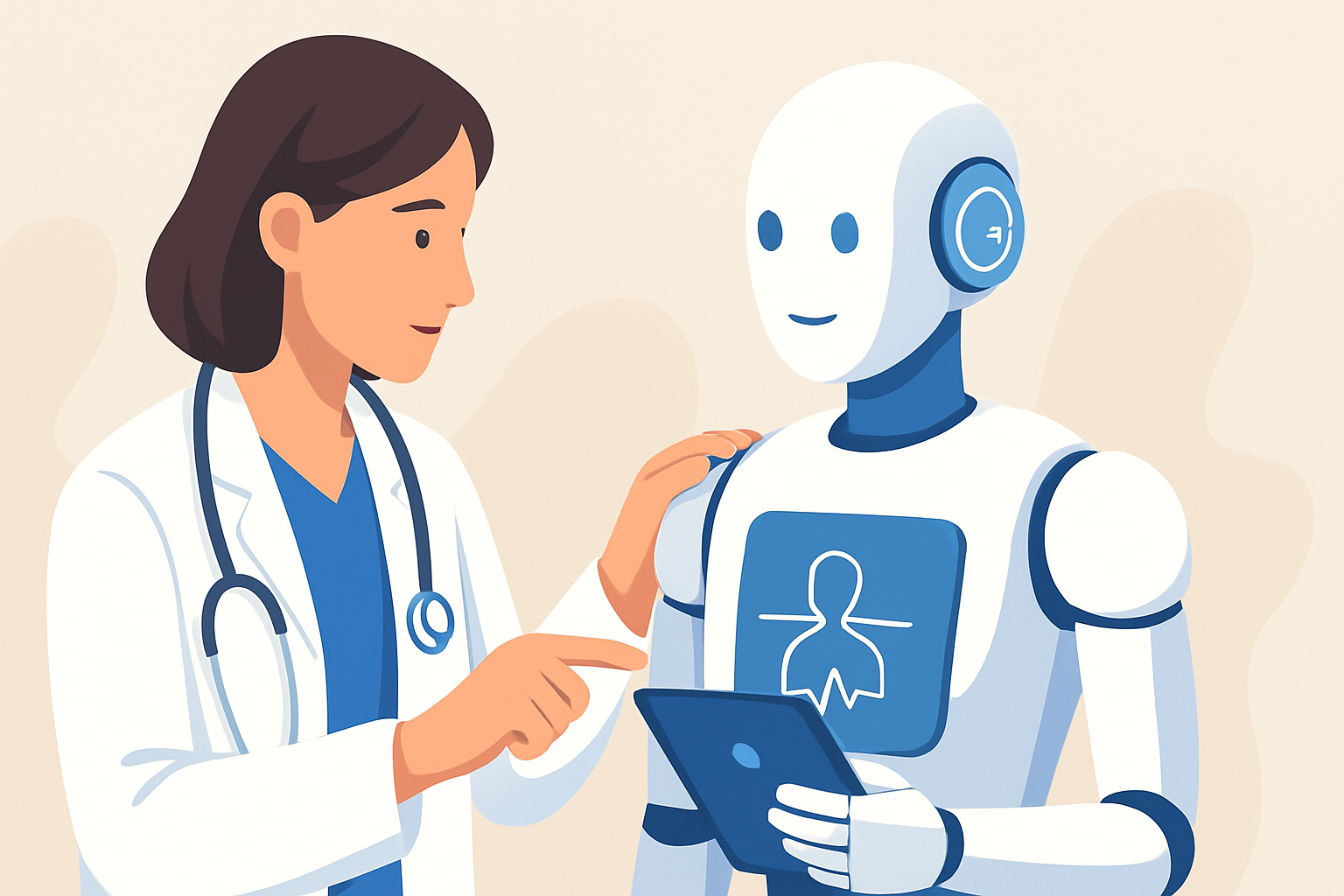
No. AI augments clinicians by automating routine tasks and surfacing insights. Final judgment and patient communication remain human responsibilities.
Is patient data safe with AI systems?
Data safety depends on governance and security protocols. Organizations must implement encryption, access controls, and auditing.
How accurate are AI diagnostic tools?
Accuracy varies by task and dataset. Many models match or exceed human-level performance in labs, but real-world results vary.
What regulatory approvals are needed?
AI tools performing clinical functions often require regulatory review. Requirements differ by country and device risk level.
How much does AI cost for healthcare providers?
Costs range widely. Pilots can be affordable with open-source tools. Enterprise deployments require investment in data infrastructure and training.
Key Takeaways
- AI is driving real improvements in diagnosis and operations today.
- Successful adoption depends on data quality and clinician engagement.
- Ethics, bias mitigation, and regulation are non-negotiable priorities.
- Start with pilots, measure impact, and scale responsibly.
Conclusion
AI in healthcare offers meaningful benefits across clinical and administrative domains. However, careful implementation and oversight are essential.
Decision-makers should prioritize transparent validation, data governance, and workforce training. With the right approach, AI can enhance care quality, expand access, and reduce costs.
As the field evolves, staying informed will remain crucial for providers, payers, and patients alike.